Cross-platform Apps - Do you choose the right mobile framework?
Loading last updated info...
If you need to build a binary app (rather than a web app) that will run on multiple platforms (e.g. iOS, Android, macOS, Windows), you can either build and maintain multiple versions of the app - one for each platform - or you can use a cross-platform (cross compiler) framework to build one app that runs on all of them.
Video: Mobile frameworks - Comparing the big guns: Ionic, Electron, React Native, Flutter and .NET MAUI (6 min)
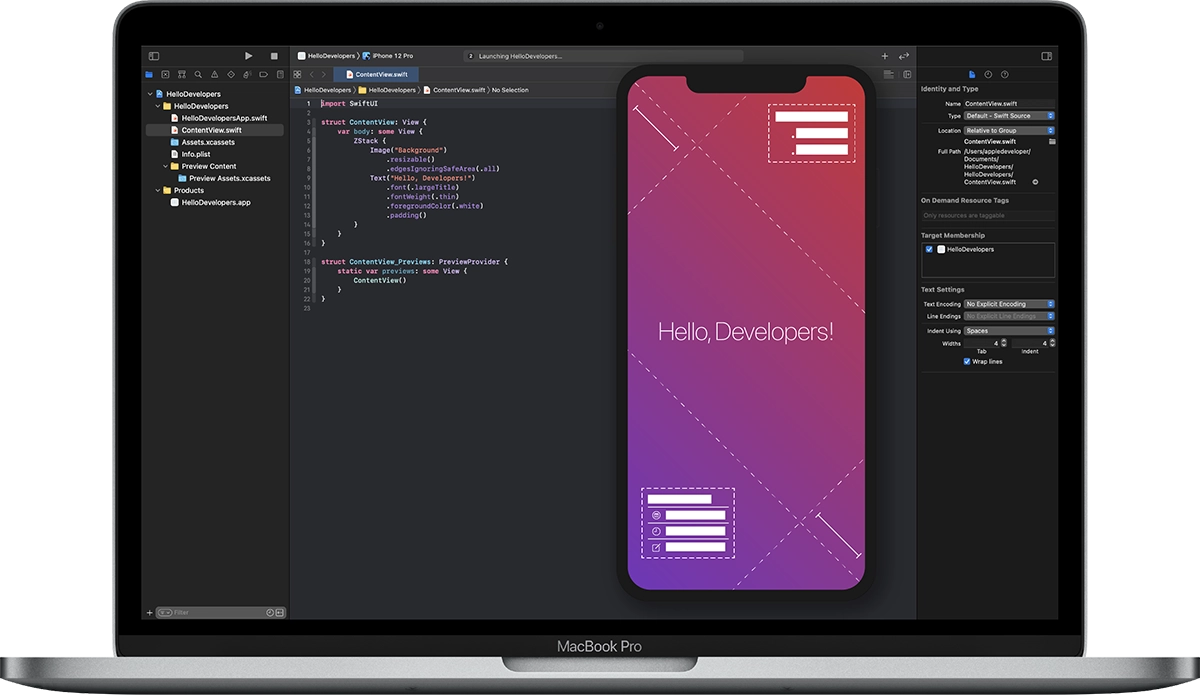
❌ Figure: Bad example - An app built in Swift can run on iOS and macOS (and Apple TV if you need it), but can't run on any other platforms
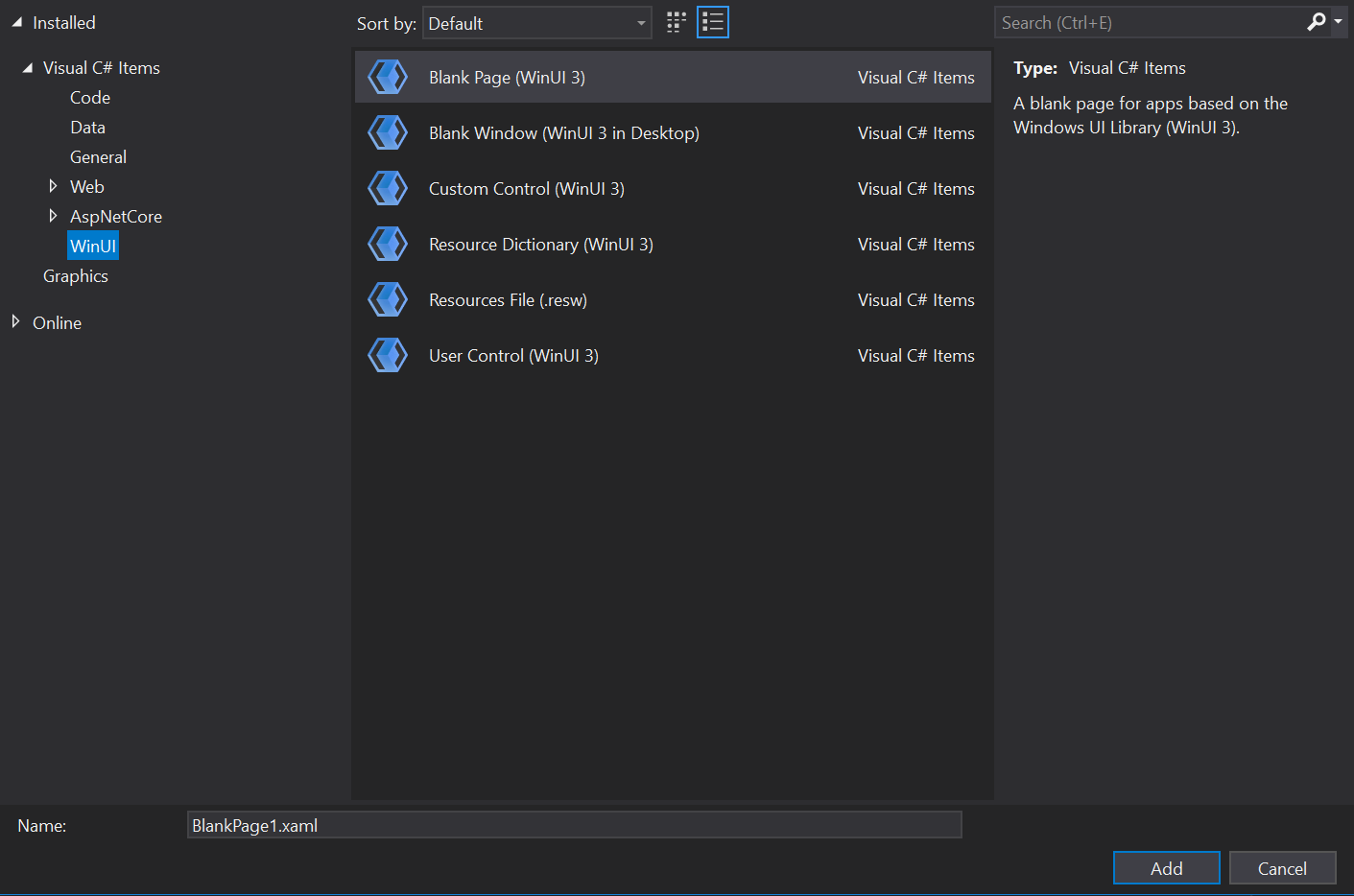
❌ Figure: Bad example - An app built with WinUI can run on Windows, but can't run on any other platforms
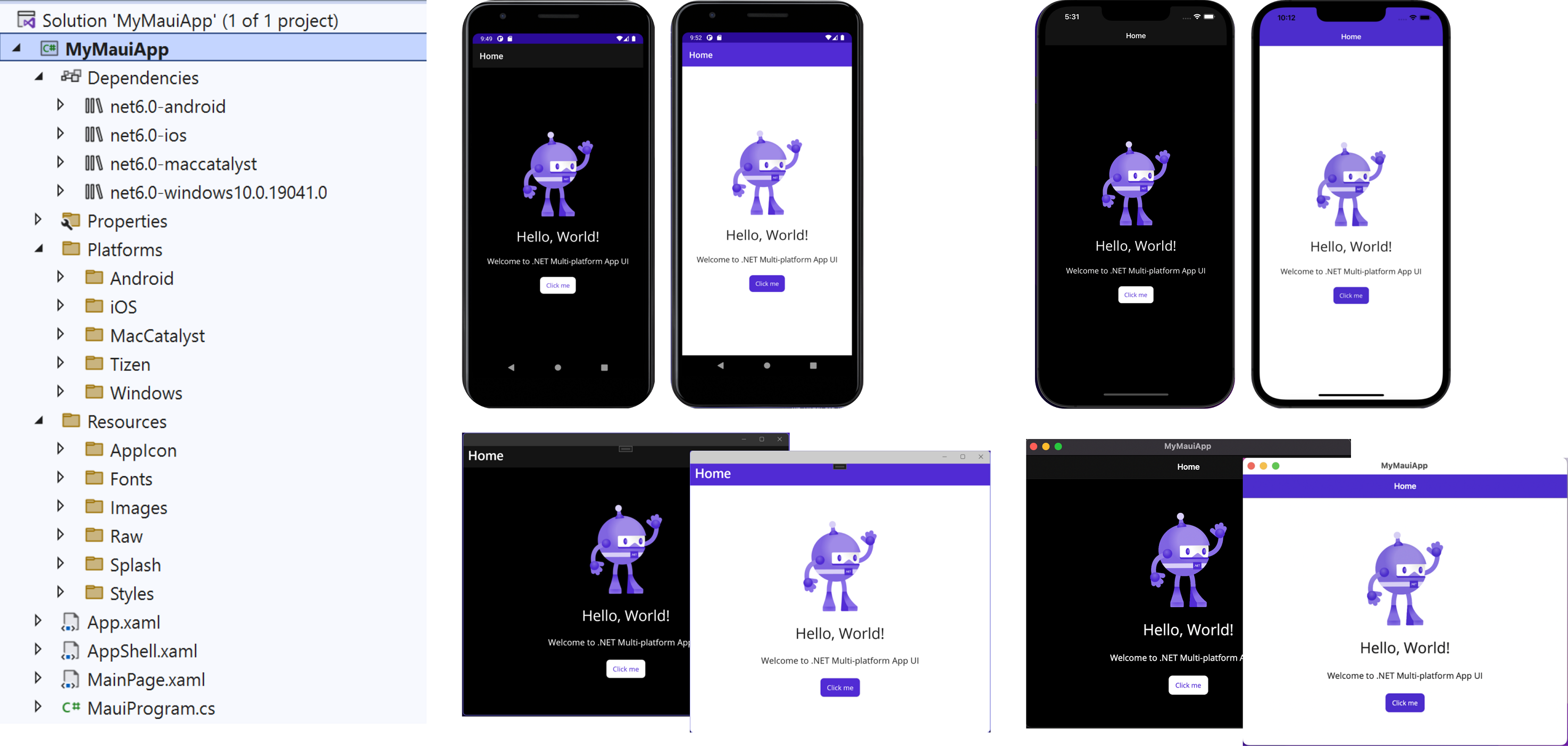
✅ Figure: Good example - An app built with .NET MAUI can run on Windows, macOS, iOS, Android, and several others
With many cross-platform frameworks available to suit every team and product, there is very little (or no) reason to build single-platform apps anymore.
Even if you only initially intend to target a single platform, by using a cross-platform framework, you give yourself the opportunity of targeting additional platforms in the future.
Understand the different approaches to cross-platform apps
Cross-platform app frameworks generally come in 3 flavors: PWAs, web wrappers and native executables.
PWAs
PWAs are the fastest way to transform your website into a cross-platform app. However, you miss out on the native feel of having it in the app store.
Web wrappers
Web wrappers take a single page application written in (or transpiled to) JavaScript, and wrap them in a web view. The web view is just like a browser tab running the SPA on the device, but without the browser navigation buttons (so you can't go to a different address for example). Examples using this approach are Ionic or Electron.
Web wrappers are an attractive option for teams with an existing JavaScript product. They can be quick to get up and running and leverage your existing skills. But they have significant limitations compared to native executable frameworks, particularly when it comes to accessing platform APIs and features, e.g. encryption, Bluetooth, AR APIs like ARKit (iOS) or ARCore (Android), etc.
Web wrappers are good for standing up quick prototypes or PoCs, but are not recommended for long term supported solutions.
Native executables
Native executables (aka cross compiler) use a cross-platform API to build the app, but compile native binary executables for each target platform.
Examples using this approach are .NET MAUI, Flutter or React Native.
How to choose the right framework
Developers building apps that target multiple platforms are in the ideal position. Several frameworks exist to fill this niche, meaning developers have the luxury of choosing the best fit for their needs.
When choosing a cross-platform framework for your team, ask the following questions:
What skills do we already have?
For .NET teams, .NET MAUI is the best choice. It targets all the major platforms, it's performant, highly customisable, and leverages your existing skills. It also integrates well with your existing solution
.NET MAUI was previously Xamarin - see announcement from Microsoft
React developers should explore Expo, a free React Native framework that offers features like official TypeScript integration and QR code links for staging environments. With Expo, you can export your code to Android and iOS equivalents in React Native using the prebuild command.
For teams with good Angular knowledge, Ionic is worth considering (but as per above, not recommended for more than a quick prototype).
Video: Clean Architecture in .NET MAUI and ASP.NET Core with Matt Goldman (1 hr 23 min)
What platforms do we need to target?
Not all cross-platform framework targets every platform. Most will work on the 'core 4' (macOS, iOS, Android and Windows). .NET MAUI will also work on watchOS, wearOS and Tizen. If you need to target Linux and/or the web, you should consider Uno platform.
What level of 1st party support do we need?
Some of these frameworks are maintained by big tech companies. .NET MAUI for example is maintained by Microsoft, Flutter is maintained by Google, and React Native is maintained by Meta. However, they are not equal in terms of first party support. .NET MAUI, for example, has an Essentials API that provides access to many cross-platform hardware features, whereas many of these need to be loaded via 3rd party plugins in other frameworks.
Developers are spoiled for choice; we have the luxury of choosing from many cross-platform frameworks. Most of them are very mature and stable, allowing us to build first-class apps.
Frameworks - Pros and Cons
Here is a nice graphic that gives a quick run-down of the pros and cons of different frameworks:
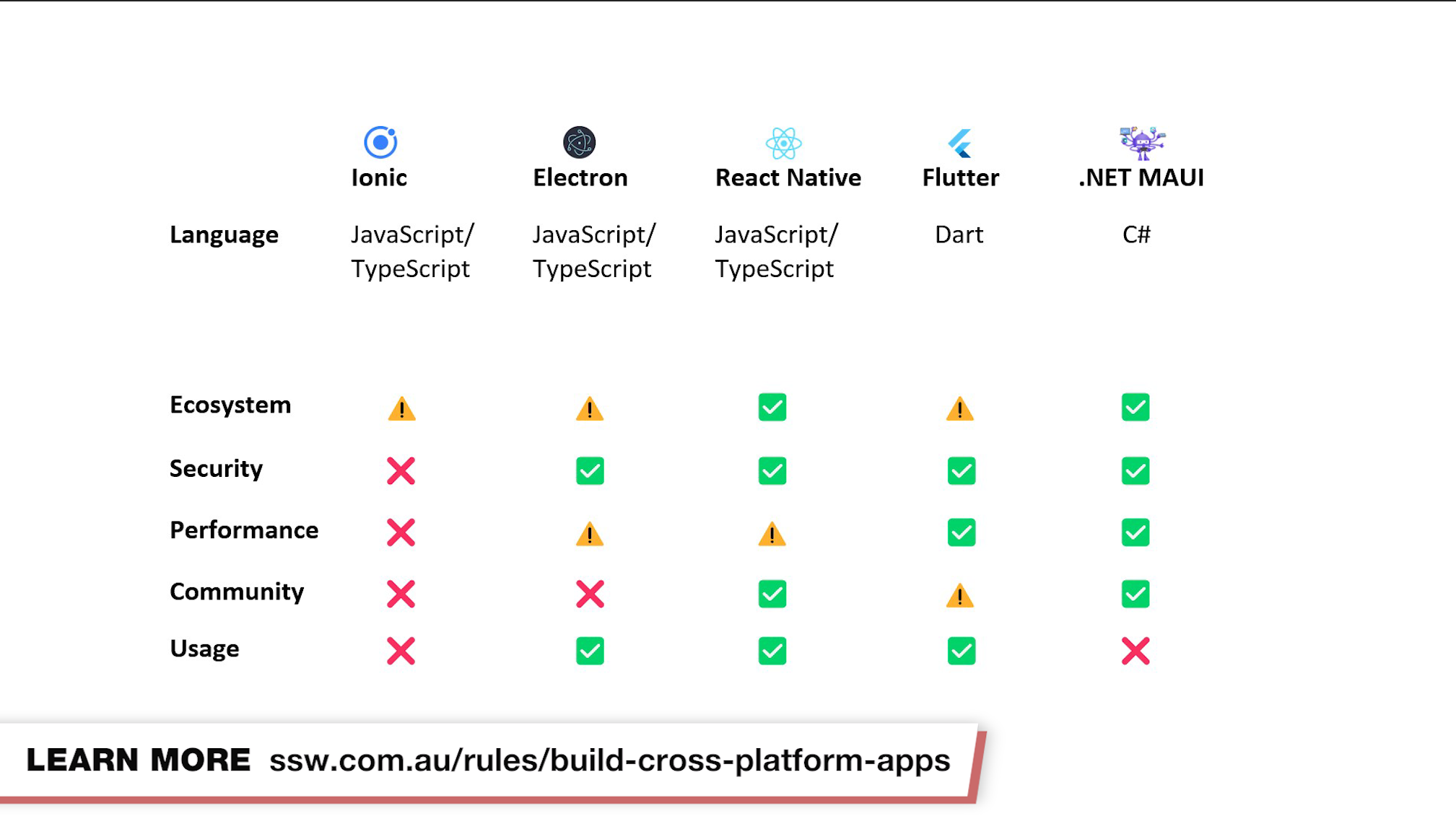
Figure: Mobile frameworks all have different strong suits
Summary
❌ Don't use a web wrapper
They might seem tempting as a quick option to start with, but you will cause yourself pain 👎🏻 down the line.
❌ Figure: Bad example - Web wrappers cause you pain in the long run
✅ Choose a native executable framework
They let you build the best apps in the long run.

✅ Figure: Good example - Choosing a native executable cross-platform framework lets you build the best apps with minimal pain 👍🏻
✅ Do choose .NET MAUI
…if your team and/or solution already use .NET.
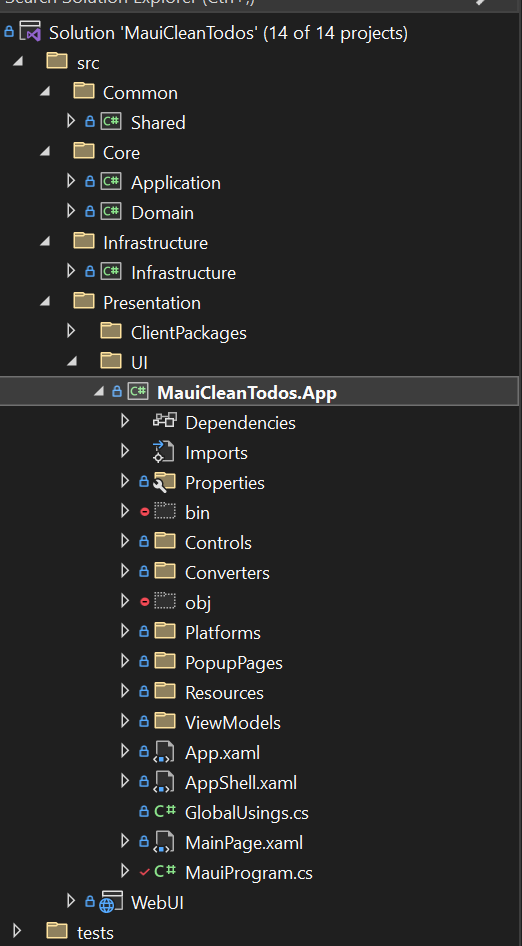
✅ Figure: Good example - Great example - .NET MAUI is the best choice for .NET developers