Do you know when to use System 1 vs System 2 AI?
Loading last updated info...
Everyone wants to integrate AI into their application and workflows, but often times you're using the wrong tool for the task. Most AI work in your app isn't writing, it's deciding.
System 1 models are built for that, you ask typed questions and you get typed answers with probabilities in blazing fast times. Generative System 2 models like Claude and ChatGPT shine at jobs that need reasoning or words. Don't guess which one you need - test them on your own data and let cost, accuracy and speed decide.
Jev is incredible | Theo - t3.gg (Watch from 3:01 - 7:42)
What are System 1 and System 2 AI?
The term comes from Daniel Kahneman's “Thinking, Fast and Slow”, which splits human thinking into two modes. AI models are now splitting the same way.
- System 1 (aka Jev) - is fast and unconscious, it runs constantly without you noticing. Assessing faces, patterns, senses and impressions. It costs no effort.
- System 2 (aka ChatGPT) - is slow, deliberate and analytical. The thinking deployed for reasoning, writing and planning
"I love Jev, and I set up a duplicate PBI checker for the TinaCMS backlog in order to reduce duplicates"
- Adam Cogan
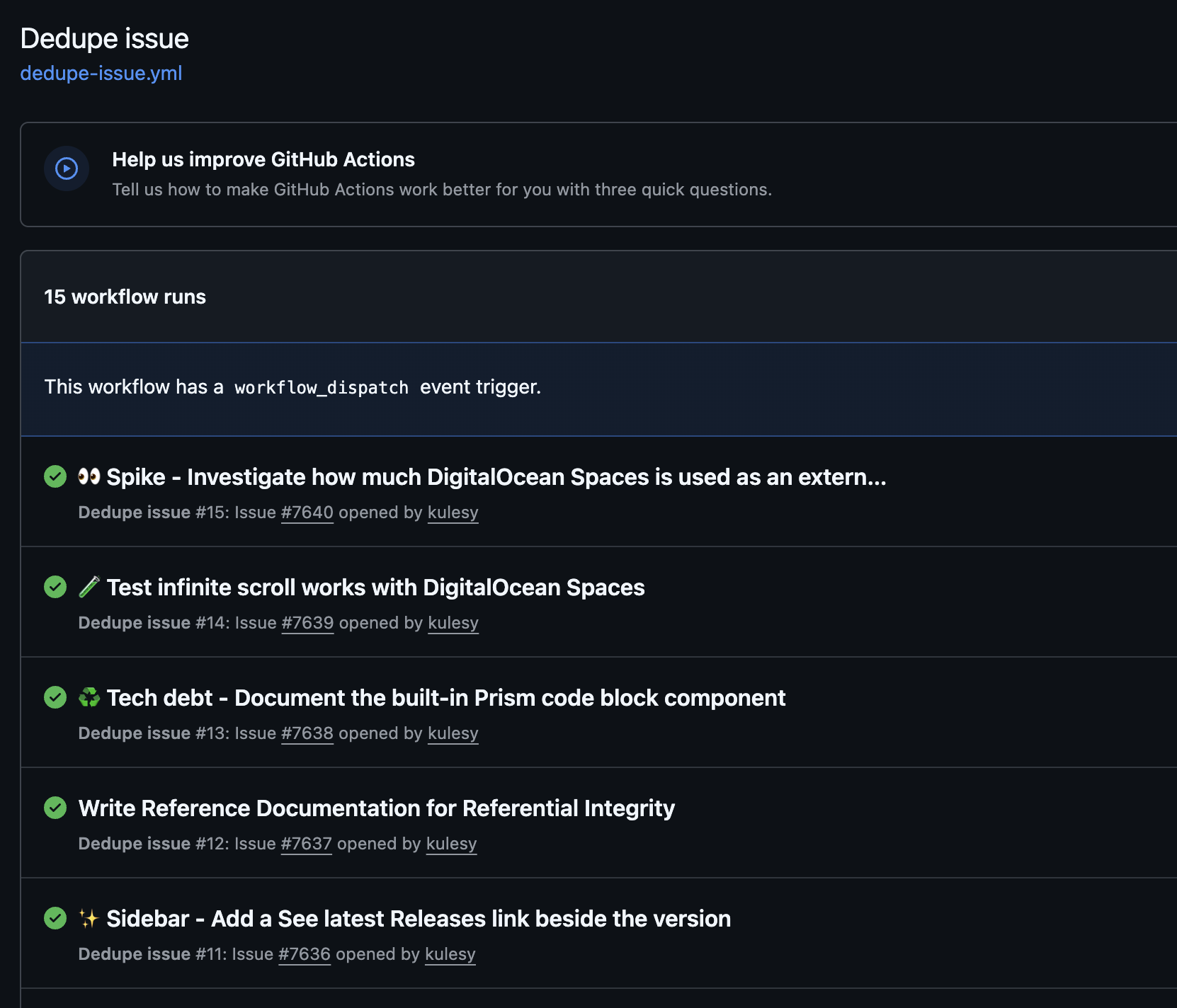
Figure: Duplicate PBI checker - on TinaCMS
Find it here: github.com/tinacms/tinacms/actions/workflows/dedupe-issue.yml
How do they typically compare?
These are tendencies, not hard rules. The lines blur once you tune an LLM for short answers (more on that below).
| Jev | Reasoning Models (ChatGPT, Claude) | |
|---|---|---|
| Input | Data plus typed questions (yes/no, choice or score) | Text, images, files, audio |
| Output | Selected decisions with probabilities and confidence scores | Free-form text or code |
| Speed | Fast - about 100ms | Seconds to minutes |
| Cost | Input tokens only | Input, reasoning and output tokens |
| Best for | Classify, route, score, gate | Write, summarise, reason, plan |
When should you use System 1?
It's a strong candidate when the answer fits in a dropdown.
- Triage - Is this email urgent? Which queue does this ticket belong in? Which branch of your workflow should this run down?
- Routing - Does this question need the cheap model, the expensive one, or just a database lookup?
- Gating - Does this shell command need a human to approve it before your AI Agent runs it?
- Scoring - How well does this CV match the rubric, from 1 to 5?
Question (choice): Which queue? billing | bug | feature
Response: bug (0.91), billing (0.06), feature (0.03)
Figure: A System 1 model returns a typed answer and tells you how sure it is
The probabilities are the bonus. Auto-route anything above 0.9 and send anything below 0.6 to a person.
Rick & Morty Explain Jev AI: Stop Using LLMs for Tiny Decisions! (1min)
When should you use System 2?

Figure: ChatGPT fighting Jev 🤖
Use it when the output is words or code, or when the model has to work out its own next step towards a goal.
- Writing - Email replies, summaries, docs
- Reasoning - Planning, debugging, and agentic work where the model decides what to do next
- Extracting exact values - System 1 models can't reliably pull out dates, amounts or counts
- Explaining a decision - System 1 gives you a probability, not a reason
How do you choose the right model?
Don't label the problem as System 1 or System 2 and then pick from the shortlist. Put the candidates side-by-side on your own data and pick the one that fits the job.
- Build a test set - 50-100 real inputs with the answer you expect
- Run every candidate - A System 1 model like Jev, a small LLM, and a frontier LLM
- Measure 3 things - Accuracy, p50/p95 latency, and cost per 1,000 calls
- Pick per job - The winner for triage might lose for scoring
You can make an LLM behave like System 1 for the test. Set max_tokens to 1 and turn on logprobs, and you get one label back with a probability for each option. That's a fair fight on cost and speed, not a strawman.
Check your provider first. Not every API exposes logprobs. OpenAI does, so confirm yours before you build the test around it.
Use single-token labels. With max_tokens set to 1, you only see the first token. If "billing" and "bug" both start with "b", the probabilities mean nothing. Use labels like A, B, C or check each label is one token.
"Routing tickets is a dropdown question, so it's a System 1 job. Let's plug in Jev."
❌ Figure: Bad example - Picking a model because the task feels like System 1 or System 2
Test set: 100 real tickets (example numbers)
- Jev - 94% accurate, 110ms, $0.40 per 1,000 calls
- Small LLM (max_tokens = 1, logprobs) - 91% accurate, 350ms, $0.30 per 1,000 calls
- Frontier LLM - 96% accurate, 1.8s, $6.00 per 1,000 calls
Decision: Jev for triage. Frontier accuracy isn't worth 15x the cost for this job.
✅ Figure: Good example - Measuring the candidates on your own data, then picking the one that fits
Re-run the test when a new model ships or your data changes. Today's winner won't be next quarter's.
How do you use both together?
Decide first, generate second. System 1 reads the input, your code branches on the answer, and only the cases that need words reach the LLM.
For example, take a website enquiry form. Jev answers three questions in a single call: Is this spam? Sales or support? Which state and country? Spam is dropped for a fraction of a cent. Everything else goes to Claude, which drafts a reply for the right person.
Add a confidence gate to your harness for the best of both. System 1 handles the answers it's sure about. Anything below your threshold escalates to an LLM, or to a person. You only pay LLM prices for the hard cases.
Jev launched in September 2026, so pilot it on a low-risk pipeline before you put it anywhere critical.
Learn more
- Jev AI - Official site and API docs
- A deep dive into Jev - Question types, limits and harness patterns
- Thinking, Fast and Slow - Where System 1 and System 2 come from