Do you know the importance of paying back Technical Debt?
Loading last updated info...
Technical Debt (or tech debt) is when you defer work that needs doing in your code. And, just like when you defer a payment and accrue financial debt, Technical Debt must be repaid, and it accumulates interest (in the form of reduced velocity) while it remains unpaid.
“Tech debt is waste”
Common causes of Technical Debt
Technical Debt can occur for many reasons, for example:
- Taking shortcuts or implementing quick hacks to ship a feature faster (sometimes a conscious decision with the Product Owner)
- Shipping a reduced version of a feature due to time pressure or external dependencies
- Code that is hard to understand or overly complex, such as methods that span multiple screens
Systems need to have features added to them to continually remain useful (or competitive). As new features are added to the system, often more Technical Debt will be introduced. But as any system ages, it will accumulate Technical Debt.
Important: When you become aware of Technical Debt in a product, you must add it to the backlog. Whether you have discovered the Technical Debt or added it intentionally, either way the discussion and decision must be recorded in a PBI. This allows the team to factor paying it back into their Sprint planning.
It also helps to add a TODO comment in the relevant code with a link to the PBI. This will help other developers understand that it is a known issue.
Example
A developer takes a shortcut to get some early feedback on a new feature.
- $100 - Full feature
- $20 - Feature with shortcuts (no tests, dirty code, whatever it takes)
- $80 - IOU via PBI in the backlog e.g. TECH DEBT - {{ FEATURE }} - Planned
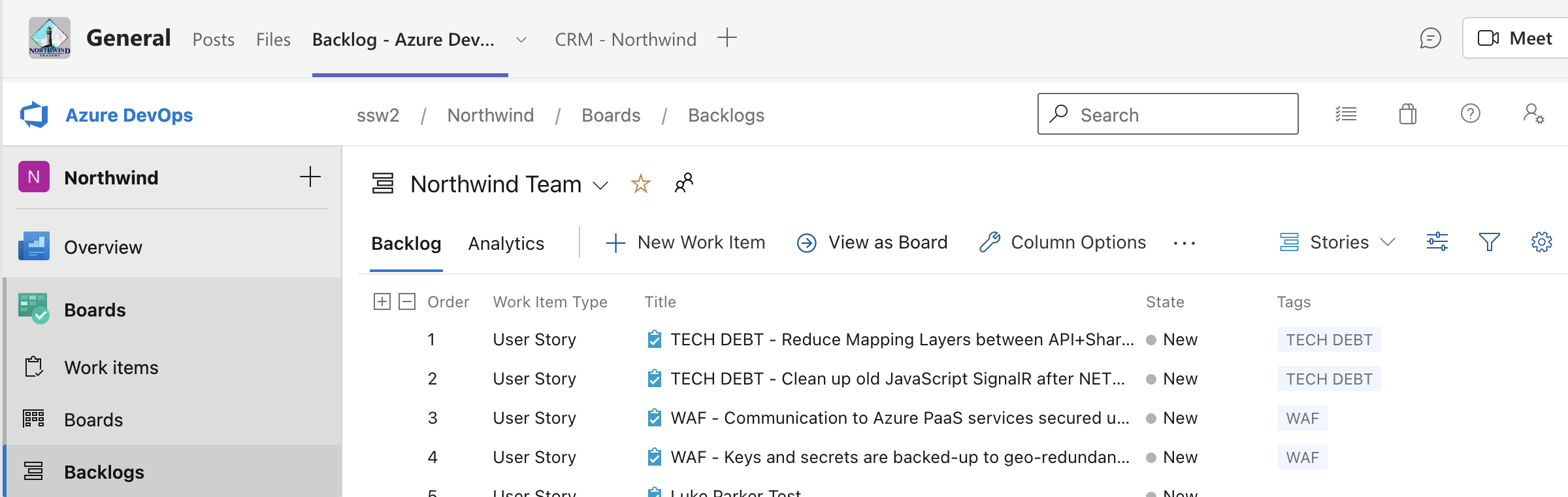
✅ Figure: Good example - Technical Debt is very visible to the Product Owner
What are the consequences of Technical Debt?
- Fewer product features over time
- More developer friction
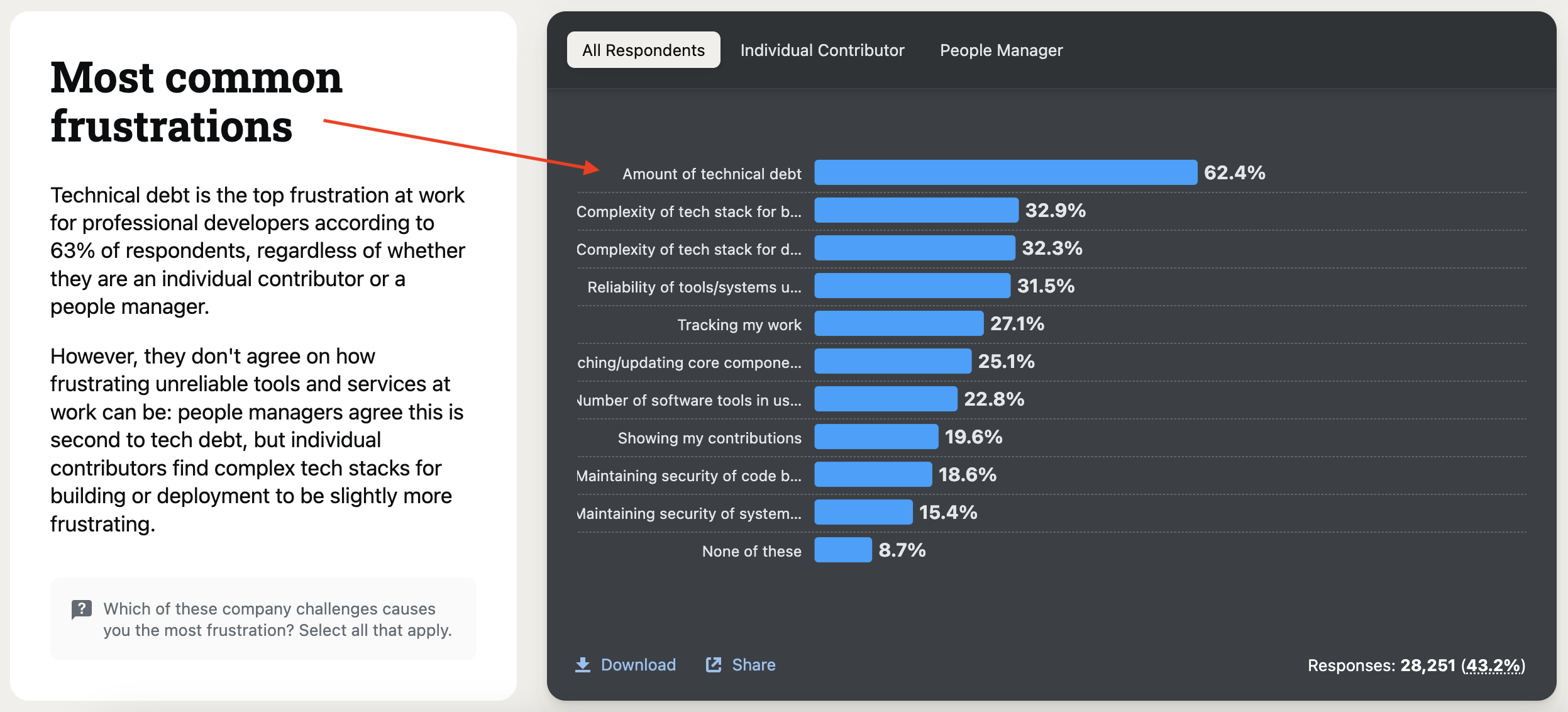
Figure: Professional Developers survey
The 3 types of Technical Debt
1. Planned Technical Debt
Sometimes you want to quickly implement a new feature to get it out and receive some feedback.
PBI: TECH DEBT - {{ FEATURE }} - Planned
Note: Martin Fowler calls this "Deliberate Technical Debt".
2. Discovered Technical Debt
During a code review, you or the team notice something as part of the system that is clearly Technical Debt. This code is hindering the ability to add new features or is hard to read/understand.
PBI: TECH DEBT - {{ FEATURE }} - Discovered
Note: Martin Fowler calls this "Inadvertent Technical Debt".
3. Unavoidable Technical Debt
Every system will accumulate Technical Debt over time. For example, if you built an API with ASP.NET Core 2.0 (which is now out of support), you have Technical Debt because that version is no longer supported.
This kind of Technical Debt cannot only negatively impact the productivity of the team, but it can also introduce a security risk.
Another example is that the architecture you selected may have been right based on the original spec, but as requirements change or new requriements emerge, this may no longer be the case.
The team can choose to refactor now, or accept the Technical Debt and continue to deliver features on the current architecture.
PBI: TECH DEBT - {{ FEATURE }} - Unavoidable
Note: Martin Fowler would also classify this as "Inadvertent Technical Debt".
Get a verifiably stable application
.NET Pain from Prototype in Production to Verifiably Stable Application with Luke Parker (1 hour 13 min)
How to repay Technical Debt
Just like a business that receives pre-payment from customers, a software team should be reviewing the size of their liabilities (being the list of PBIs with Technical Debt).
At the Sprint Planning:
- Show the Product Owner the list of outstanding Technical Debt PBIs
- The Product Owner should make sure that the developers review the list of Technical Debt list and pick at least 1 PBI to pay back during the upcoming Sprint
Screenshots
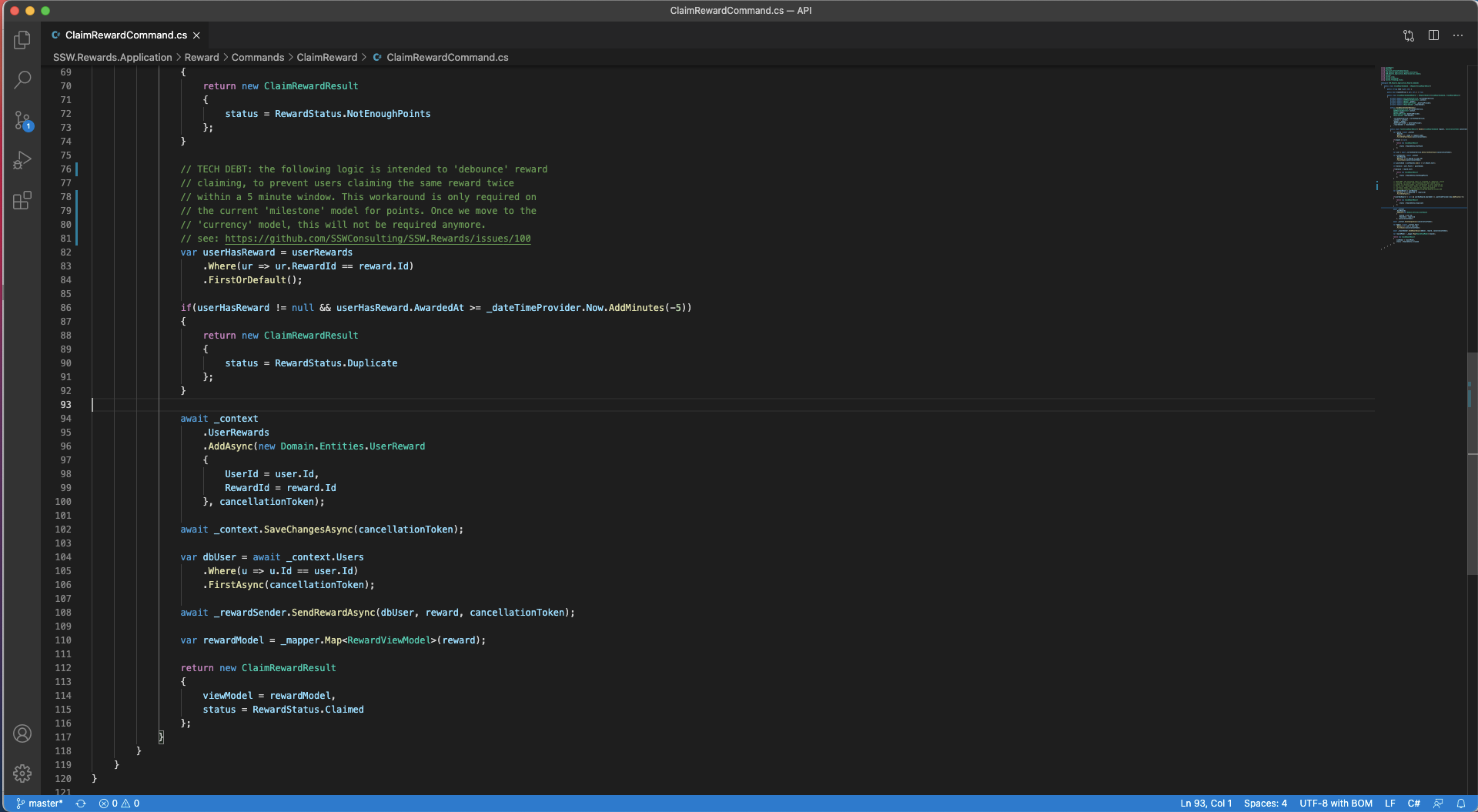
Figure: Screenshot of code with Technical Debt comment and link to GitHub Issue

Figure: Screenshot of Technical Debt on backlog
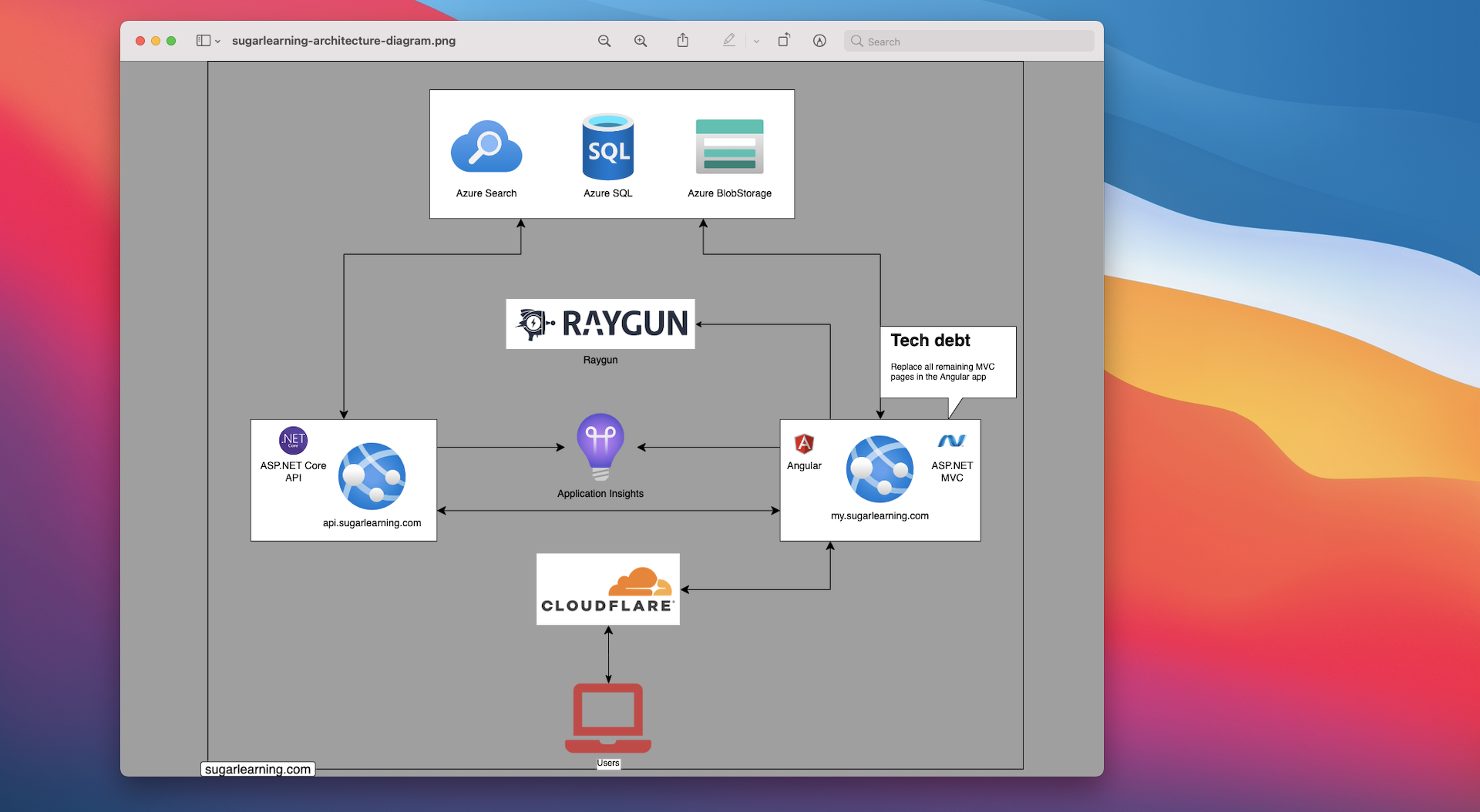
Figure: SugarLearning architecture diagram