Do you know the best load testing tools for web applications?
Loading last updated info...
Load testing places a simulated "load" or demand on your web application and measures how it responds to that load, recording such valuable metrics as:
- Throughput rates
- Resource and environment utilization (e.g. CPU, physical memory, etc.)
- Error rates
- Load balancer performance
Load testing tools are designed to help you perform load testing, by recording metrics about the application as the load is varied and allowing you to visualize where user load impacts performance and/or causes application errors.
Choosing a load testing tool
There are a number of factors to take into account when choosing a tool to help you with load testing, including:
- The number of users you want to simulate
- The infrastructure you have available
- The cost model
Number of users and infrastructure
Most commercial load testing tools will support some number of virtual users when running the tests on your hardware. For more significant, real-world loads, however, cloud-based offerings provide the opportunity for almost unlimited scale.
For small user loads, utilizing your own hardware may be sufficient. For larger loads, the tests will likely need to be run on some type of cloud infrastructure (either provided by the tool vendor or your own preferred service, e.g. Microsoft Azure). The ability to scale load tests on demand via cloud resources has made large-scale load testing much more feasible for modern applications.
Cost model
There are many different load testing tools to choose from. Some of the most popular tools are open source (e.g. Apache's JMeter) and there are many commercial tools offering additional features and support. Your choice of tool will depend on budget and suitability for purpose.
Some of the best load testing tools
- JMeter (open source, Apache)
- k6 (open source and SaaS offering, Grafana)
- LoadRunner (Micro Focus)
- Blazemeter (Perforce)
- Loader.io (SendGrid)
- LoadView-testing.com (Dotcom-Monitor)
Note: Azure Load Testing is a fully managed load-testing service that enables you to generate high-scale load. It uses JMeter to generate the loads. Note that this service is currently only in Preview.
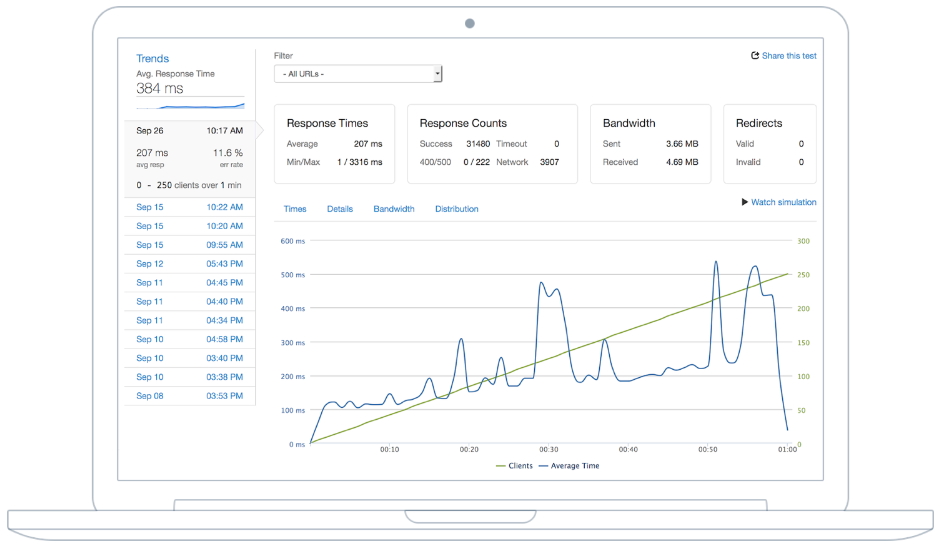
Figure: Loader.io load testing results
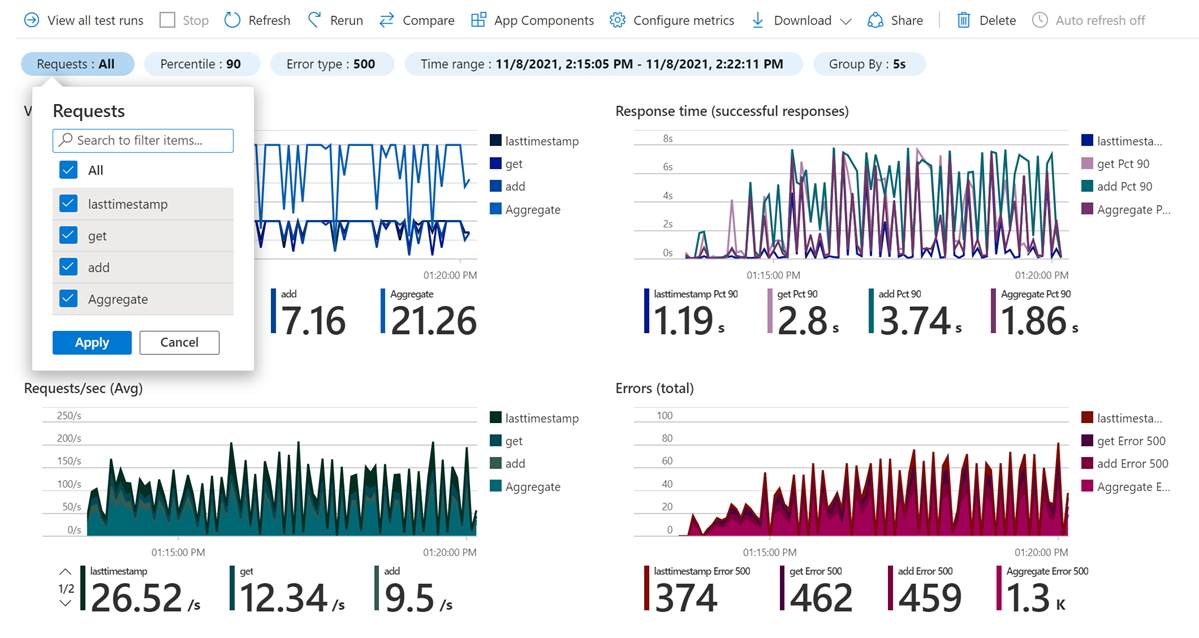
Figure: Azure Load Testing results