Do you know the drawbacks of a fixed-price, fixed-scope contract?
Loading last updated info...
Fixed-price, fixed-scope projects feel safe because everyone wants certainty. In software, they often create the opposite: less flexibility, more negotiation, slower feedback, and worse outcomes.
The problem is not “fixed price” by itself. The problem is pretending the scope is fully known before the team and client have learned enough.
Why clients ask for fixed price and fixed scope
Clients usually ask for fixed price because they want budget certainty, internal approval, and reduced risk. These are reasonable goals.
The consultant’s job is not to argue against certainty, but to explain that software certainty is best achieved through short feedback cycles, transparent prioritisation, and controlled scope — not by locking in assumptions too early.
First, let's define what is meant by "fixed price" and "waterfall" in software development:
- Fixed price - A pricing model where the client pays a fixed amount of money for a predetermined scope of work. The scope of work is typically defined in advance, and any changes to that scope can result in additional charges or renegotiation of the contract
- Waterfall - This is a traditional project management approach where the development process is broken down into distinct phases, such as requirements gathering, design, implementation, testing, and deployment. Each phase is completed before moving on to the next, and changes to requirements or design are typically not allowed after a phase has been completed
Now, let's look at the main reasons why fixed price and waterfall can be ⚠️ dangerous in software development:
- False certainty - The client gets a fixed number, but that number is based on incomplete knowledge
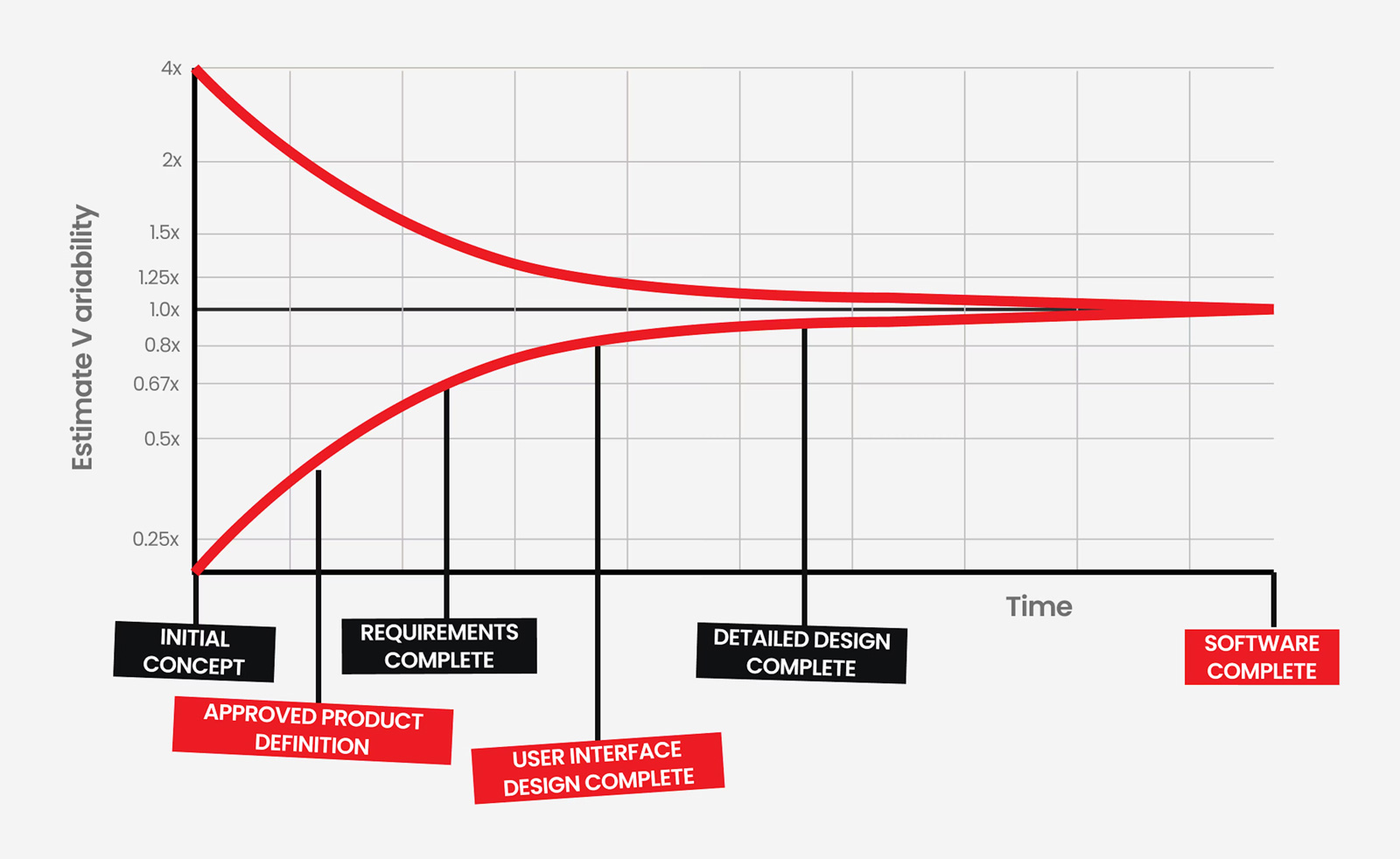
Figure: The cone of uncertainty in software cost and size estimation
- Expensive change requests - Every change becomes a commercial discussion instead of a product decision
- Slower feedback - The team spends too long documenting and building before the client sees working software
- Scope protection over value delivery - The supplier is incentivised to defend the agreed scope rather than ask, “What gives the client the best outcome?”. This leads to shortcuts being made, which reduces the quality of the software produced
- Lower trust - When the real world changes, both sides can feel the other is being unreasonable
In summary, a fixed price and waterfall approach can be dangerous in software development consulting because they lack flexibility, limit collaboration, delay feedback, reduce quality, and increase risk.
The solution
The use of an iterative agile methodology (like Scrum) provides constant feedback and collaboration, giving the necessary agility to implement features while allowing adjustments during the project. This iterative development process can help mitigate the risks and lead to a more successful project outcome.
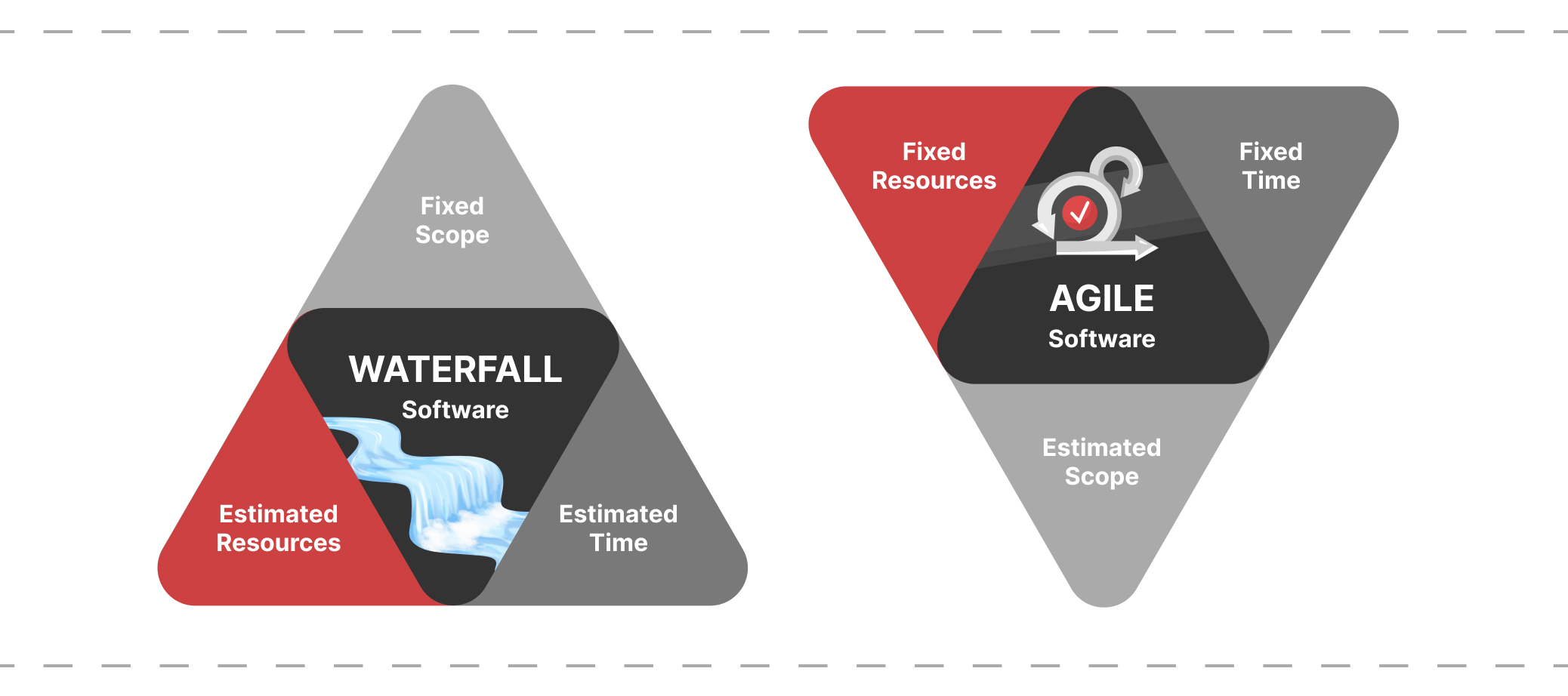
Figure: Although Waterfall fixes the scope, it then makes the resources and time variable. If you want to fix those, you need to vary the scope