Do you know when to use Reporting Services?
Loading last updated info...
Like any solution, Reporting Services has its pros and cons. From our experience, we have discovered these things about Reporting Services:
❌ Cons:
- Parameters - you are forced to use built-in controls
- Query string - when you change the parameters and refresh a report, the values do not appear directly in the query string, making it hard to copy/paste URLs
- Can't separate SQL into a strongly-typed dataset or middle-tier object like in ASP.NET
- There are potential difficulties with the deployment of RS reports and the exposing of them. However, once we have the infrastructure...
- Not able to work natively with modern .NET
✅ Pros:
- You can develop read only reports faster in Reporting Services than ASP.NET
- Maintenance with RS is easier than ASP.NET, as with most cases you don't have to write any code
- Flexibility with groupings and totals is easier. In ASP.NET you would need to iterate through the DataSet, keeping variables with the totals
- Parameters are built-in. In ASP.NET there is code
- Drilldown interactivity. In ASP.NET you need to code up a treeview
- Users can have reports automatically emailed to them on a schedule
- Users can export natively to PDF and XLS, plus a variety of other popular formats
Nowadays, better technologies are used to handle reports. Examples include:
- Power BI - cloud-based solution that provides visually appealing reports and dashboards
- HTML based reports - HTML frameworks have evolved significantly, making it quick and easy to make great reports
For a more detailed comparison between reporting solutions, take a look at our Guidelines for Report Solutions - Web Clients.
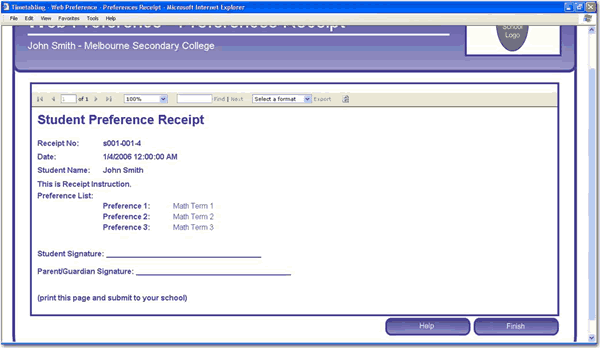
Figure: Reporting Services has built-in support for PDF/XLS export and can be embedded in your ASP.NET pages