China - Do you know how to do digital marketing in China?
Loading last updated info...
The biggest mistake most western companies make when embarking on a business journey in China, is assuming that their current digital marketing strategies will work over there.
China is different. There are different rules, platforms and of course, they have a government controlled firewall that blocks many western platforms your are familiar with, like Facebook, X, Instagram, LinkedIn and YouTube. Uh oh. That's right - none of the platforms you currently use everyday now work in China, you need a new plan.
China has a huge amount of social media users, there are 1.28 billion active users (2025) - which is huge! It is a huge opportunity for market growth, particularly for app owners who would like to expand their product to millions of users.
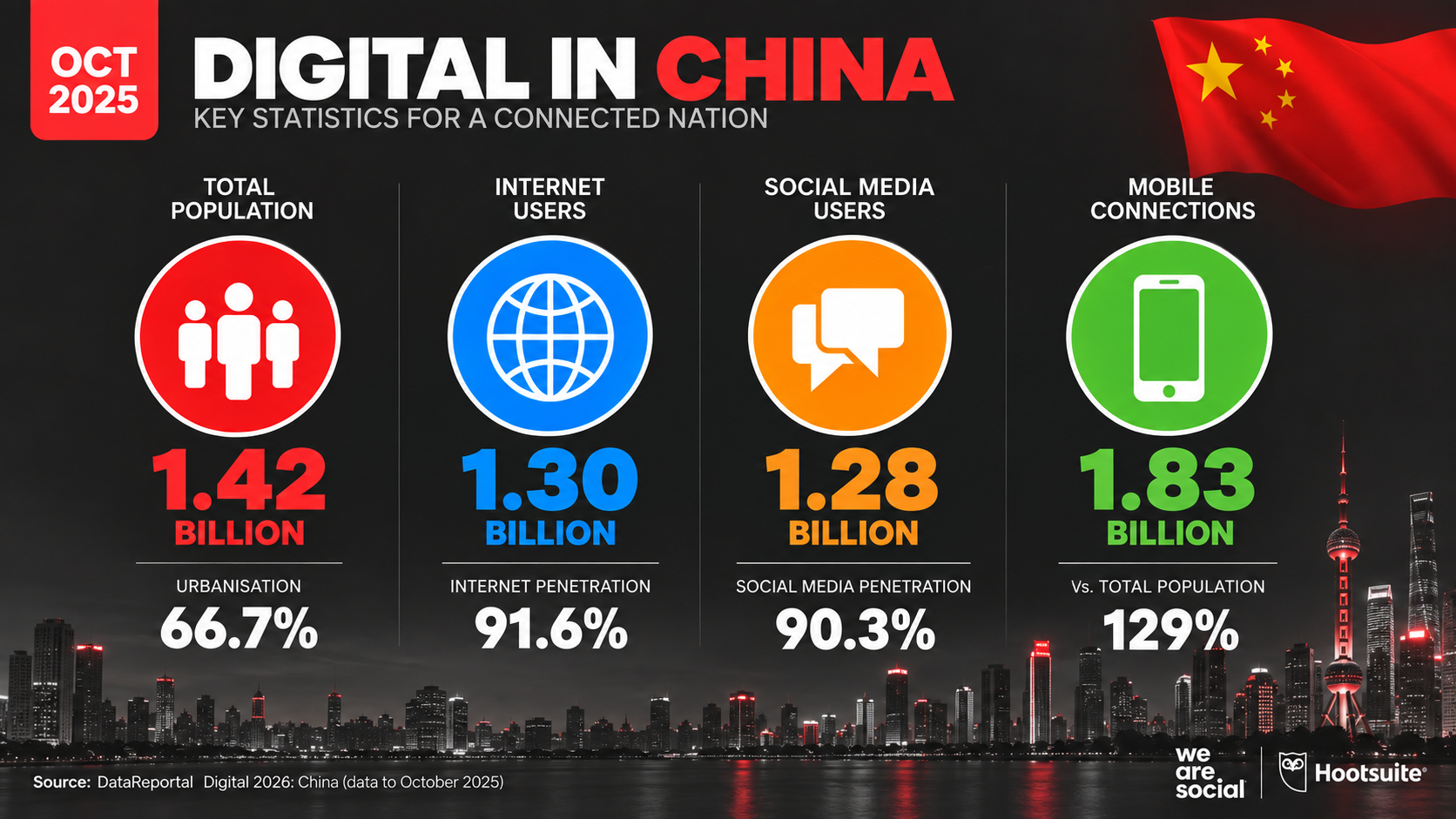
Figure: There are 1.28 billion social media users in China, 90.3% of the overall population
There is only one big problem, China has hundreds of platforms, and none of them is a straight swap for a western one. Baidu is not just "Chinese Google". RedNote is not "Chinese Instagram". If you treat them as copies, you will make the wrong content for all of them.
Do you know the best platforms and how to use them in China? Here is a list of our top 6:
1. Baidu (Google Search of China)
90% of online experiences in the Western world begin with a Google Search. In China it is Baidu that dominates, with about 58% of online search starting there, and 72% on phones. That's billions of searches per day!
If you already run Google Ads, Baidu Ads works the same way — you bid on keywords and pay per click. But getting your ads approved in China is a different story!
- Pay first. Google bills you later. Baidu wants the money in the account before your ads go live
- Baidu checks who you are. Google needs an email and a credit card. Baidu needs your business licence, and locks one account to one company and one website
Baidu is strict about landing pages
- Hosting: Your website must be hosted in China, have an ICP filing, and belong to your company
- Accounts: One company can promote multiple websites using sub-accounts, one website per account
- Company details: Show your company name, business, products and contact details
- Downloads: Software downloads may require a Software Copyright Registration Certificate
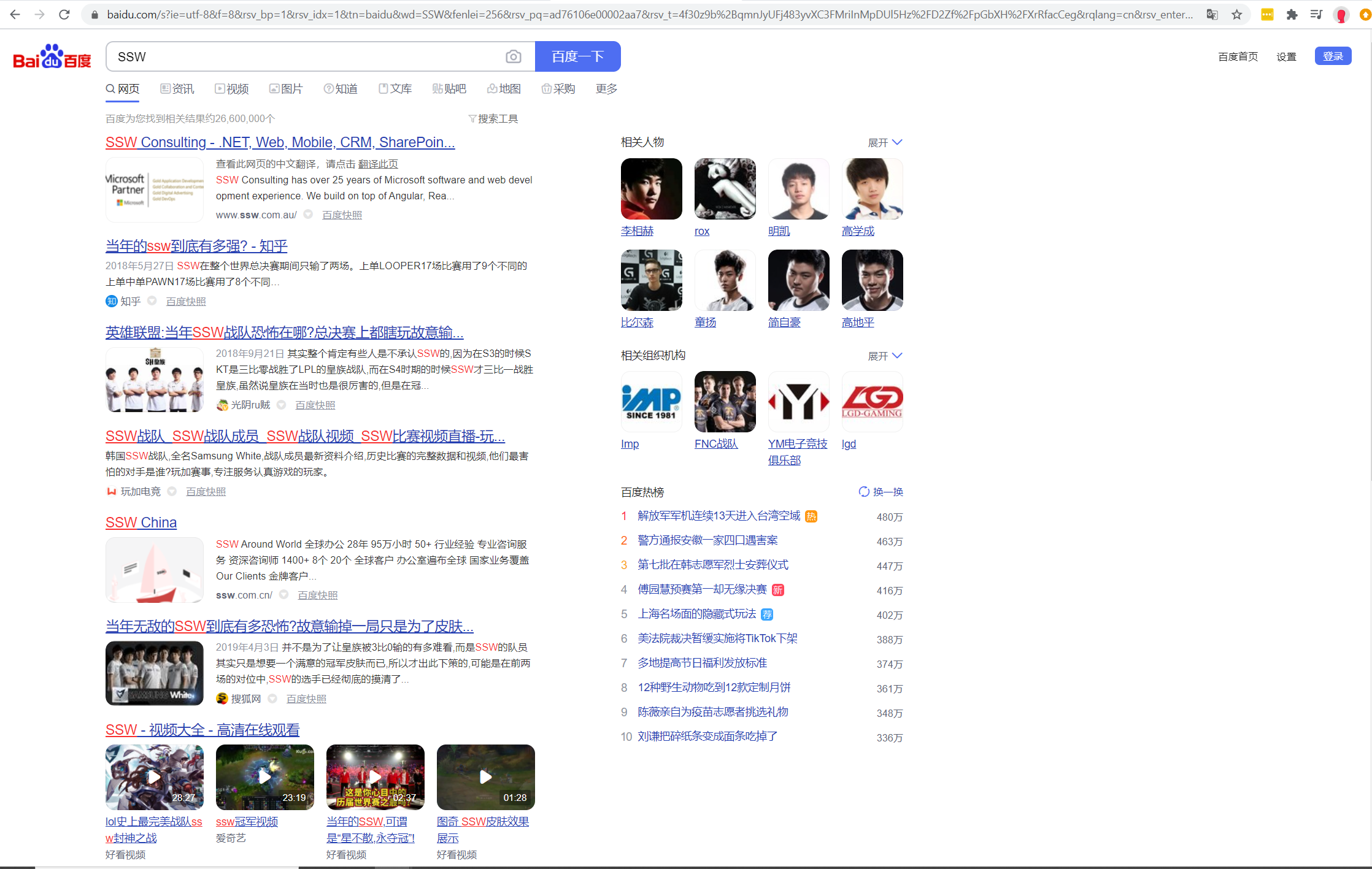
Figure: A search for 'SSW' using Baidu, we are organically No.1 on this page
2. RedNote (Instagram + Pinterest of China)
RedNote, aka Xiaohongshu, is a leading Chinese social media and e-commerce platform combining lifestyle sharing and online shopping. Founded in 2013, it now has over 400 million monthly active users, mainly young and urban. The app features photo and video posts on fashion, beauty, travel, and daily life, with a sleek, Instagram-like design. Users can discover trends, share authentic reviews, and buy products directly through the platform.
Here is the part that matters for marketing: people come to RedNote to look things up. Before a Chinese consumer buys anything, a face cream, a laptop, a holiday, a dentist. They look it up here first and read what real users said. If your brand has nothing on RedNote, you lose the argument before it starts.
As a brand on RedNote, you can:
- Post - notes and short videos that show up in search
- Advertise - paid placements in the feed and search results
- Sell - run a store inside the app, no website needed
- Go live - livestream selling, which is huge in China
- Work with KOLs - most discovery happens through influencers and everyday users, not brand accounts
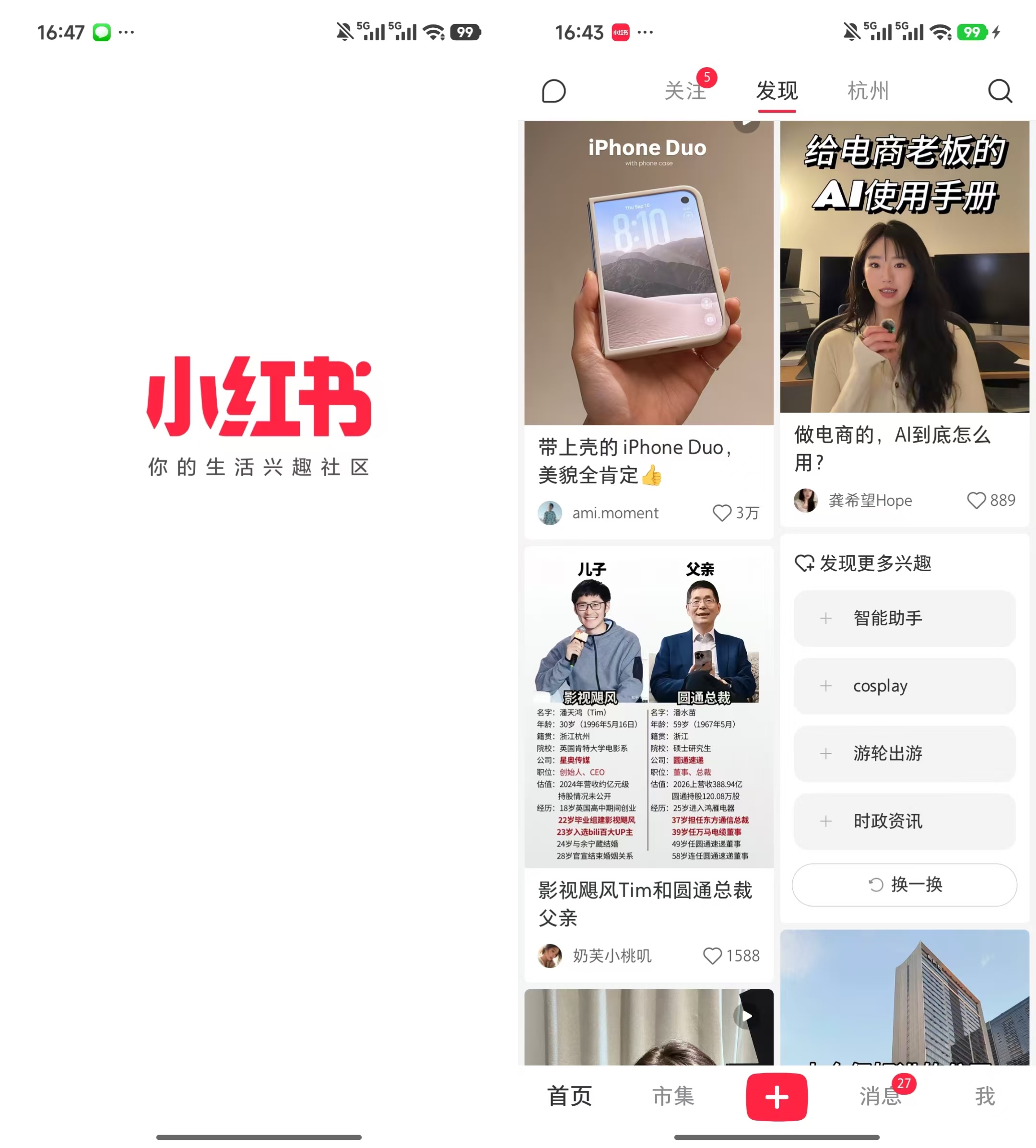
Figure: RedNote splash screen and Discover page
3. Douyin (Tiktok of China)
Douyin is the app Tiktok was built from, same company, same look, but a separate platform that only runs in mainland China. It reaches almost 1 billion people, which is most of the country.
2 things different from TikTok:
- A real shop inside the app. Videos, livestreams and product pages all feed one Douyin Store. The whole purchase happens without ever leaving Douyin
- Local services. People book restaurants, hotels and tickets on Douyin the way they would on Meituan. If you have a physical place in China, this is how people find it
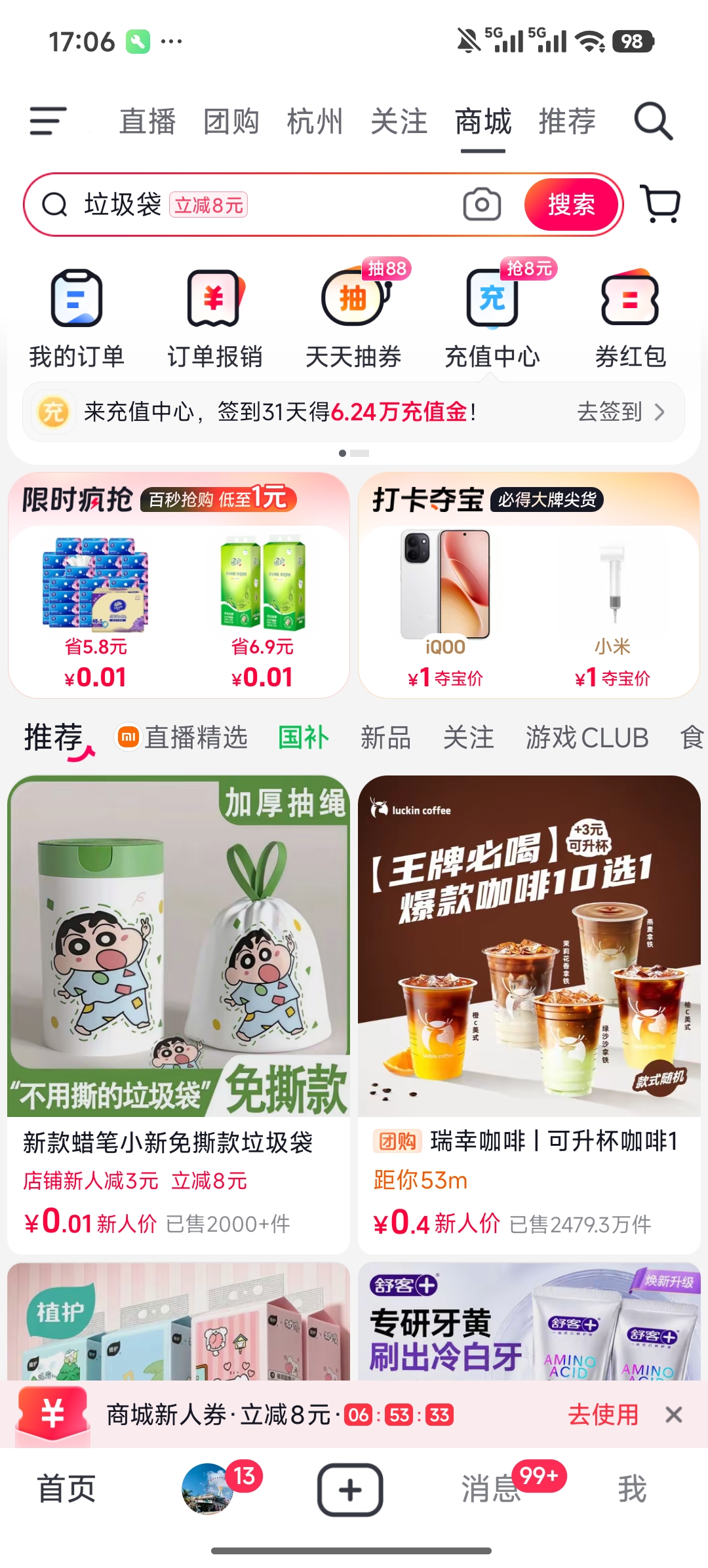
Figure: Shopping page inside Douyin
4. Bilibili (YouTube + Reddit of China)
We all know the best marketers use video to sell their products and talk to their audience directly. In the West that means YouTube. YouTube is blocked in China, and the closest thing is Bilibili.
What started as China's largest anime streaming site has grown into a video community for young Chinese audiences. It has 376 million monthly active users, and 115 million of them watch Bilibili almost 2 hours everyday.
Comments fly across the screen while the video plays, viewers argue with each other in real time, and a good creator is treated as a member of the community rather than a channel. That part is much closer to Reddit.
According to Bilibili's annual report to investors, their top 5 most watched video categories are:
- Entertainment
- Lifestyle
- Gaming
- Anime
- Technology
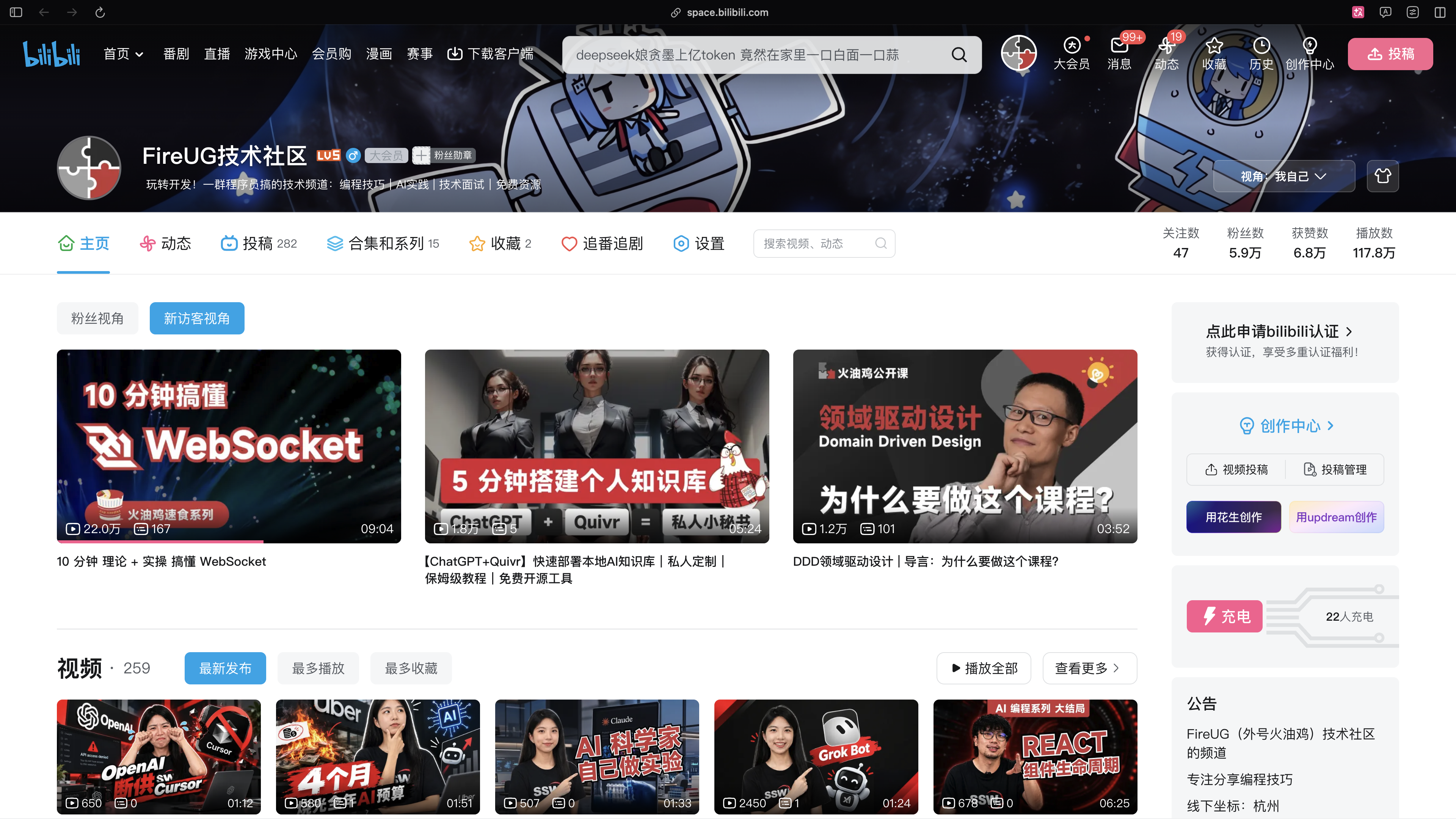
Figure: FireUG is owned by SSW China and it has about 60k followers on Bilibili
5. Weibo (Twitter/X of China)
Weibo is a social media platform where people go not only to post, share and interact with each other, but also to follow trends and see the news. With 561 million monthly active users, this is the place for content to go viral and for Chinese influencers to build their online communities.
Douyin and RedNote have taken a lot of Weibo's attention in recent years, but 254 million people still open it every day, and it is still where news breaks and trends start. Think of it as your news and PR channel, the place you announce things and see what people are saying about the world.
6. WeChat (The Chinese Super App)
WeChat started as a chat app. Today, its more than 1.4 billion monthly active users can use it to talk to friends, follow brands, shop, pay and book services. It is part of daily life in China.
For businesses, the big advantage is how these parts work together. Someone can see your ad, read about your brand, book through your Mini-Program, and chat with your team, all inside WeChat. Your team can use WeCom to manage that customer relationship.
You can start with one tool or connect several as your business grows. This makes WeChat useful across the whole customer journey, from the first time someone hears about you to their next purchase.
There is a lot to the WeChat ecosystem, and overseas companies have access to different tools. Our guide explains what is available and how to use it: