Do you know how to get the most out of your event booth?
Loading last updated info...
A booth costs a lot in fees, merch, travel, and staff time. But it doesn't run on autopilot. Without the right execution, you're paying for an expensive piece of furniture that attendees walk past.
Getting it right comes down to 3 things: the space, the people, and lead capture and conversion.
Video: How to Network: Networking Etiquette Tips for Professionals (12 min)
1. The space
The physical setup signals “open for business” or “leave us alone” before anyone says a word.
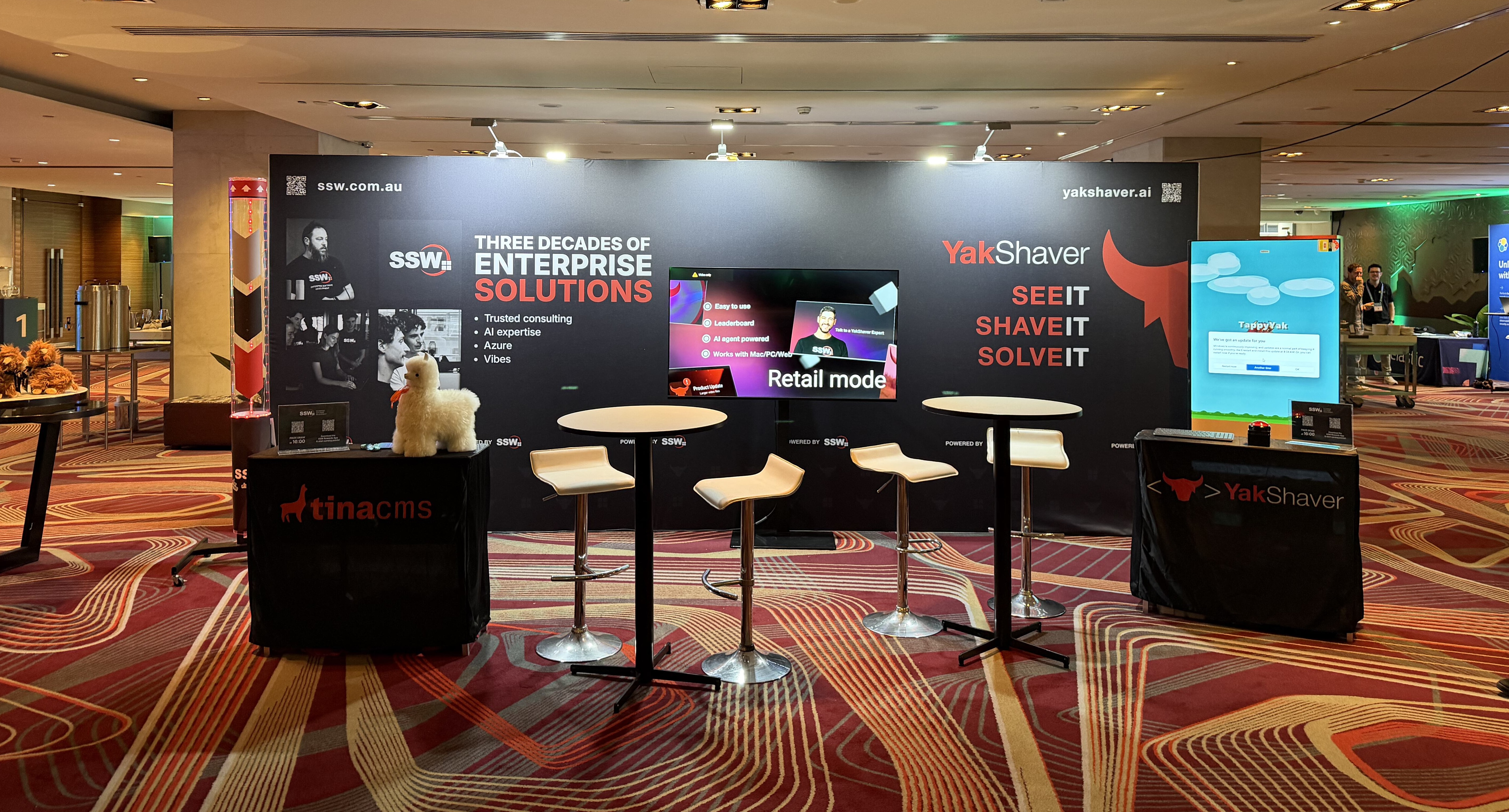
Figure: SSW's booth at NDC Sydney 2026
- Banner visible from the main walkway, not blocked by a laptop screen
- Demo screen faces the walkway, looping a short highlight reel
- Merch within easy reach, not piled up like a fortress
- Front edge of the table kept clear so attendees can lean in
- Bags, water bottles, and laptops out of sight
- No chairs behind the table, since sitting creates a “checkpoint” feel
Before doors open, do a 5-minute walkthrough of the venue. Know where the coffee, bathrooms, and main foot traffic flow are so you can answer attendee questions and look like part of the event.

❌ Figure: Bad example - (🤖 AI generated) Staff on phones, table covered in bags, demo screen facing the wrong way

✅ Figure: Good example - Staff at the front edge, talking and demoing with attendees, TVs looping a video and swag on display
2. The people
A booth will always have a better experience when it is staffed by people who are:
- Friendly and warm, easy to approach
- Engaging, can hold a conversation with a stranger
- High energy, can keep that energy up for a full day
- Knowledgeable enough to qualify, even if they hand off the deep technical chat
Anyone from the company at the event, whether you're attending talks or part of booth team, grabbing coffee, or just walking past, can engage, qualify, and bring people to the booth.
Body language and posture
- Stand, don't sit. Sitting reads as “off duty”
- Phone away. Eyes on the walkway, not the screen
- Spread out, face outward. Two staff chatting together looks like a private meeting
- Smile and make eye contact with people walking past
- Read the room. Slow walkers and lanyard-readers are warm. Fast walkers with headphones are not
Sustain energy throughout the day
- Tag in and out so nobody burns out. Talk slots are good times to take a break
- Reset between waves. Tidy merch, restock cards, wipe demo screens
3. Lead capture and conversion
This is where the booth pays for itself. The job of junior staff is to engage and qualify. The job of senior staff (e.g. account managers) is to close.
Open the conversation
Avoid “Can I help you?”. It's a closed question that gets a closed answer.
Staff: "Can I help you?"
Attendee: "No thanks, just looking."
Attendee walks away.
❌ Figure: Bad example - 'Can I help you?' is a closed question that gets a closed answer
A good opener is specific and gives the attendee an invite to ask questions and explore further. Anything that opens a door is better than anything that asks them to commit before they know what's behind it.
Staff: “Ever had a bug that you wanted to report, but didn't have the 10 minutes to fill out the bug report?”
Attendee: “All the time!”
Staff: “We've built YakShaver to do this in 30 seconds, let me show you”
Conversation begins.
✅ Figure: Good example - An open invitation with a low-commitment hook
Other openers that work:
- Have an interesting activity - People inevitably get tired from multiple conversations throughout the day, having an interesting activity gives them something to break up the monotony of constant presentations and provides an interesting starting point for a conversation
- Reference their lanyard - “Oh, you're from {{ COMPANY }} - I saw this {{ PROJECT }} you guys were working on, how does {{ FEATURE }} work?”
- Ask why they're here - “What brings you to the conference - any particular topics you're focused on?” beats "Are you looking for consulting?"
- Comment on a session - “Did you catch the keynote? What did you think?”
- Dress up in a costume - Like Gandalf or another recognisable character. It's a magnet for photos and an easy conversation starter
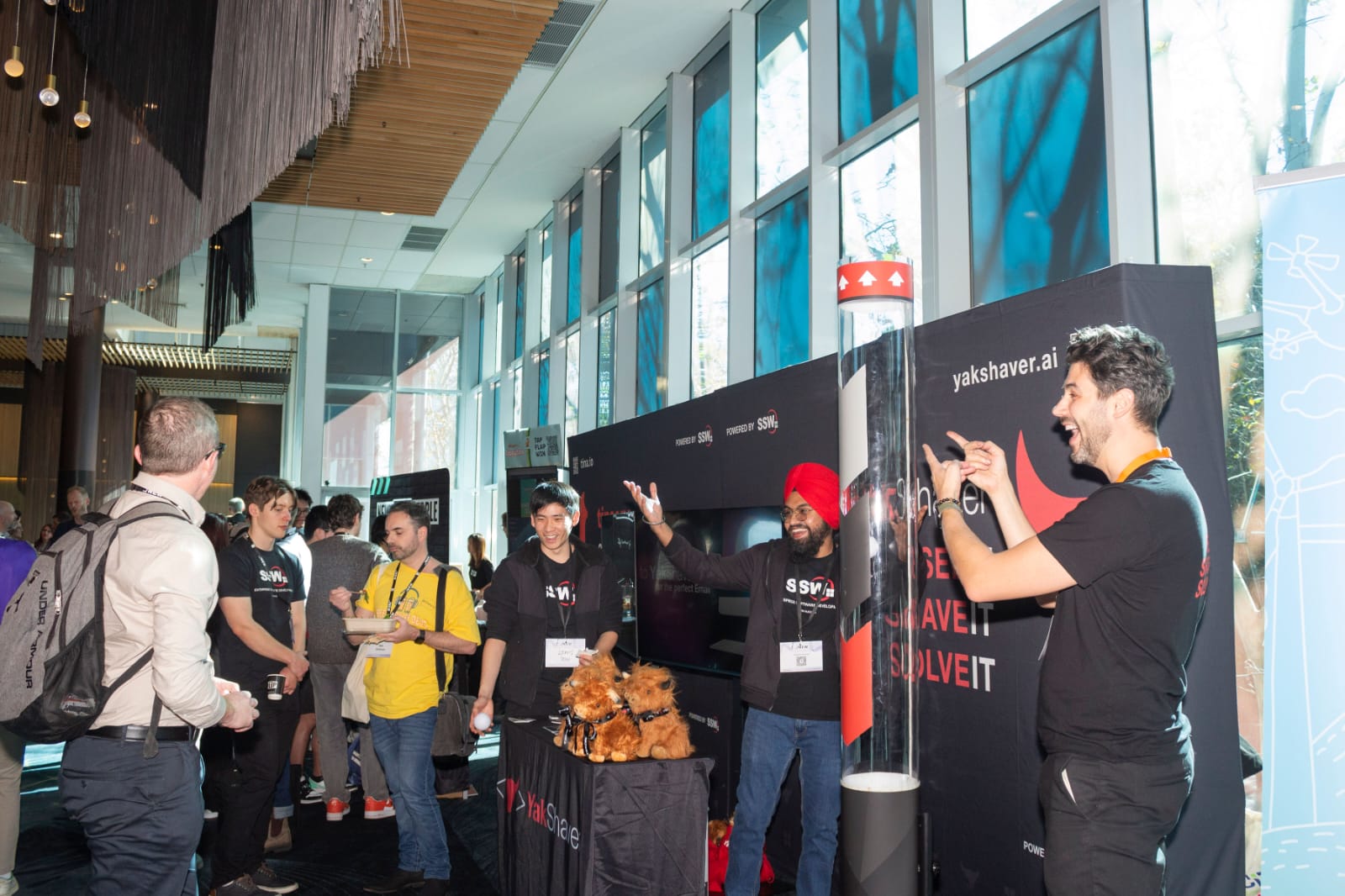
Figure: SSW staff at SlashNEW 2025 engaging attendees and starting conversations using an interesting activity as the catalyst
Qualify, don't sell
- Listen more than you talk - The attendee's problem is more interesting than your product
- Qualify gently - “What kind of work does your team do?” before “Are you in the market for consulting?”
- Know your limits - If they need deep technical or commercial detail. Never say “that's not my area”, instead, introduce a teammate by name who can help
Bob Northwind: “So how does YakShaver actually analyse the recording and determine things like acceptance criteria?"
Staff: “Let me grab Tom, since he built YakShaver. Hey Tom, Bob here was asking about how YakShaver actually analyses recordings…”
✅ Figure: Good example - Knowing your limits and handing conversations beyond your limits to someone who can help
Important: If the conversation moves toward “what does your product actually do?”, that's where you have to pitch your product.
Recognise a hot lead and hand off
A hot lead usually shows one or more of these signals:
- Asks specific commercial questions (pricing, contracts, timelines)
- Asks deep technical questions beyond your level
- Mentions a current project or pain point your team can solve
- Has decision-making authority or mentions “my team” / “my budget”
- Asks “how do we get started?” or “can we set up a call?”
When you spot one, bring in a senior immediately. Don't try to handle it yourself and risk losing the moment.
Capture the lead before they walk
You'll have too many conversations to remember anyone 3 days later. Capture it now.
Use Ticketbutler to log leads on the spot - it's faster than a business card and far easier to follow up from.
For each conversation, capture:
- Name
- Company
- Phone
- Email
- Lead potential - Rate 🔥 to 🔥🔥🔥🔥🔥 (1 = low interest, 5 = hot lead ready to act)
- Notes - One specific thing they mentioned: a pain point, a project, a question they asked, etc.

✅ Figure: Good example - Use Ticketbutler to capture leads
Optional tip: Add the lead to your personal LinkedIn. A connection made on the day is worth more than a cold request sent a week later.
See more on Do you know how to connect with people on LinkedIn?
End the conversation cleanly
Both you and the attendee need a clean way out so the next conversation can start.
- Acknowledge and close - “Great chatting - grab a sticker on your way and I'll send that link Monday”
- Don't stretch it - If the conversation has wound down, end it. Holding someone hostage at your booth costs you the next three attendees walking past
Merch strategy
Merch is a tool, not a transaction - you're not there to sell merch, but to use it:
- Give it for a conversation - The goal is the chat, not the giveaway
- Tier it - Stickers and pens can be for everyone, whereas premium items (bottles, shirts) for qualified conversations or raffles
- Don't leave it for self-service - Doing so would just turn your booth into a vending machine and lose every conversation it would have started

Figure: YakShaver and TinaCMS merch on display at the booth
After the event
The event ends. The work doesn't.
- Run a retrospective - What worked, who to follow up, what to fix next time. Memories fade fast. For more details, see Do you do a retrospective after an activity ends?
- Follow-ups within 48 hours - “Strike while the iron is hot”, you should send off promised follow ups to people while you're still recognisable. For example, "Great to meet you at {{ EVENT }} - here's that link I mentioned"