Mentoring - Do you have a mentoring program?
Loading last updated info...
Implementing a mentoring program is a powerful strategy for fostering professional growth and knowledge transfer within an organization. By pairing individuals at different experience levels, the program accelerates learning, promotes skill development, and cultivates a collaborative environment. Ultimately, it contributes to the overall success of the team.
Video: Do you have a formal or informal mentoring program? (9 min)
There's a few types of mentoring. When you don't have the skills within your company, you hire expert consultants:
- Consulting mentoring - This is most commonly all day engagements. E.g.SSW's Mentoring Services
If you do have the skills within your company, then you can up-skill people using the brains of your own company and this usually falls into 2 groups:
- Ad-hoc mentoring (informal) - You get advice when you need it
- Scheduled mentoring (formal) - You book in meetings and make a plan
Who mentors who?
Most consider mentoring to be a senior guiding and building the skills of a junior. However, you can really supercharge your company if you understand that everyone has something that they can teach someone. Being a mentor also makes people better, so employees should be encouraged to think about what they can teach others.
What should I get mentored on?
The first decision should be whether you want soft skills or technical skills (choose one topic at a time). You may already know what you would like to be mentored in, however you really should ask your peers what they think you should be mentored on. You could have a blind spot. Here's how to approach it:
- Make a list on what you would like to be mentored on. E.g. PowerShell, Power BI, Power Apps, Power Speaking...
- Approach a few people you trust, and ask them what you should be mentored on (without showing them your list)
- Then show the list, and brainstorm ideas
- Make a decision, and approach a mentor
Here are some of the things you can learn:
- Public Speaking
- Account Management
- Low Code solutions e.g. Power Apps & Dynamics
- Frontend Frameworks e.g. Angular, React & Blazor
- Backend - e.g. database design, Clean Architecture
- Debugging
- Designing big solutions - Cloud Architecture
- UI/UX Design
- Great blogging
- Increasing your social media presence
Scheduled mentoring - How does it work?
The first step is for mentees to find mentors or vice-versa.
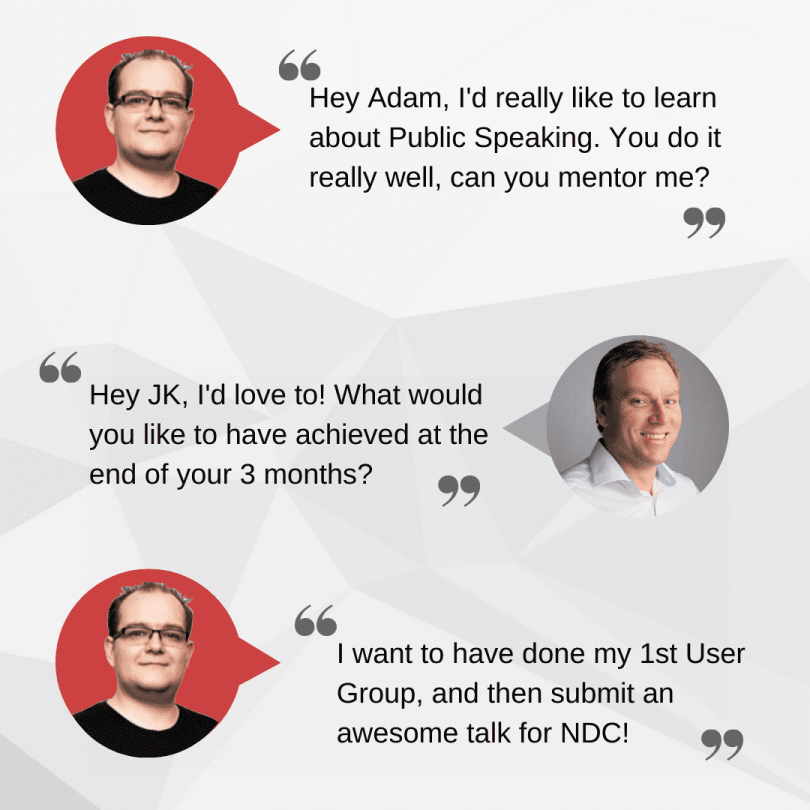
Figure: A mentee reaches out to someone they know has great skills in a particular area, and they ask to be mentored
Once a pairing has been established, the mentor is responsible for scheduling a few meetings with the mentee.
- Initial Meeting (30 mins): Introduction to the program and determination of the mentee's specific learning targets
- Weekly Check-ins (5 mins): A quick chat at the week's end to gauge the mentee's progress
- Monthly Sessions (for 3 months, 30 mins each): Intense mentoring sessions to tackle mentee's chosen target areas
- Final Meeting (30 mins): Wrap up, retrospection, and gathering of feedback to refine the program further
As a mentee, add what you are learning to your Teams status. Mentors can do the same, and let people know what you're mentoring.
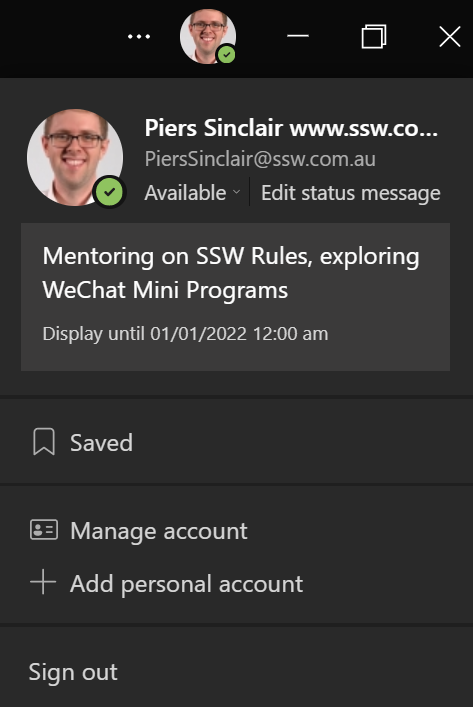
Figure: Let your colleagues know what knowledge you are sharing and learning... subtly 🙂
Initial Meeting
- Tell the mentor what you would like to achieve by the end of the 3 months
- Work out your goals & set targets
- Then the mentee works independently for a month, checking-in when needed
- At the end of each week, check-in for 5 mins to let them know how you're going
3 Monthly Meetings
- The Mentor will review their progress and give tips or suggestions on how to move forward
- Set new goals
- Then the mentee works independently for a month
- At the end of each week, check-in for 5 mins to let them know how you're going
Final Meeting
- The Mentor will review their progress and give tips or suggestions on how to move forward
- Set some longer-term goals
- Then the mentee works independently, checking in when needed informally
It is motivating to know that you will be checking-in with your mentor regularly. At the end of your 3 months, sit down and recap how well it went for you. It's helpful to give a mark out of 10.
Reward both parties
It's nice to be thankful, so add this new skill to your GitHub profile, make a social media post or even add it to your LinkedIn. Remember to give your mentor an @mention.
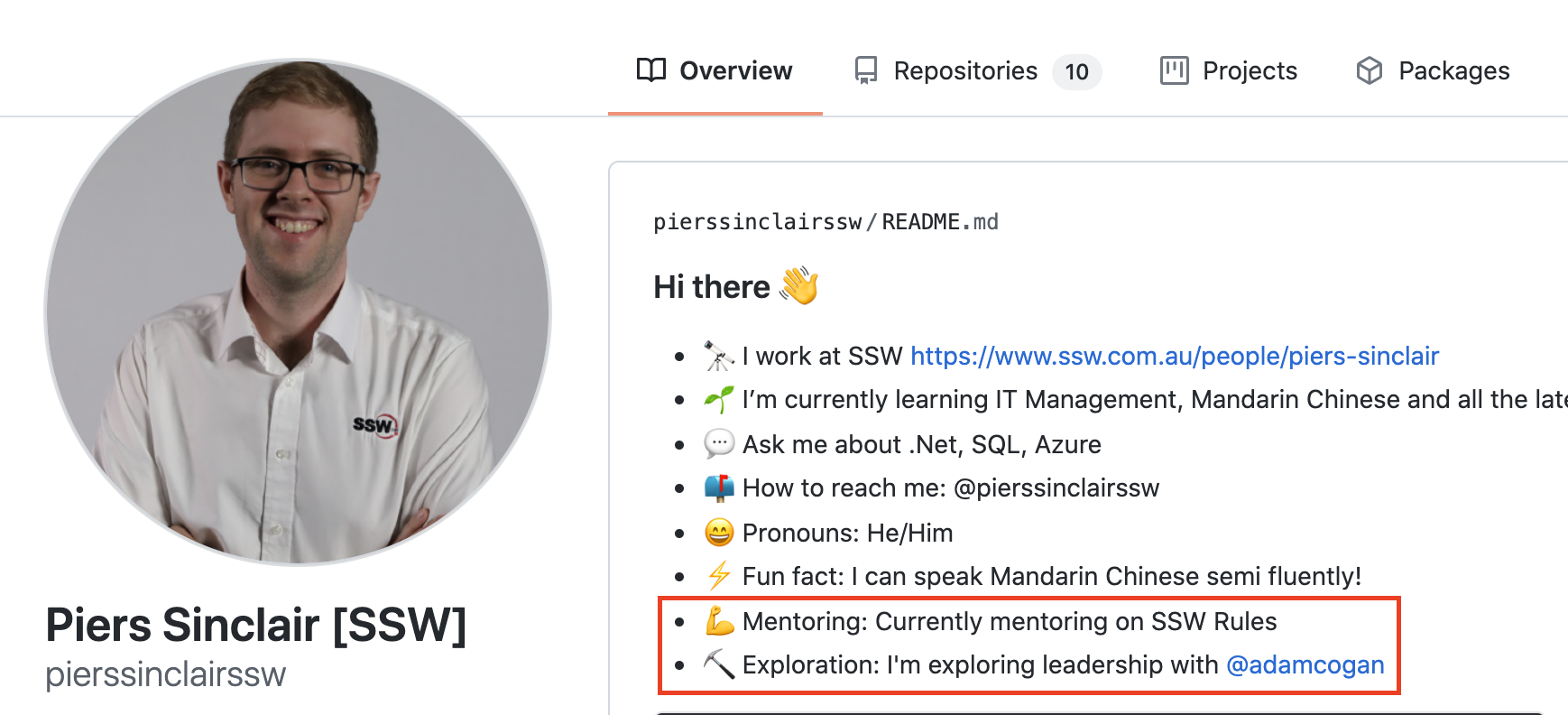
Figure: Tell people subtly that you are into mentoring. E.g. 👨🎓 Exploration: I'm exploring leadership with @adamcogan