Prefixes - Do you know why they are awesome?
Loading last updated info...
The English language can be complex, and often the context of a message isn't clear until halfway through or even at the very end. Using prefixes helps surface that context right away.
✅ Benefits of using prefixes
- Skimming – Lets you catch the context quickly without reading everything
- Context – Sets up what the item is about before the details
- Finding – Makes it easier to jump to the right item in a list
- Grouping – Keeps related items together without extra formatting
When to use prefixes
List items
Prefixes are especially useful for list items, and when written in bold, they make content easier to scan, highlight key points quickly, and improve overall readability. 👆 The list above is a good example of this.
Note: While some may associate bold prefixes with GPT-generated text, the focus should remain on clarity and effective content design, which is more important.
- Bug - Critical security issue
- Status - Needs hotfix
- Owner - Assigned to backend team
❌ Figure: Bad example - Prefixes are harder to distinguish
- Bug - Critical security issue
- Status - Needs hotfix
- Owner - Assigned to the backend team
✅ Figure: Good example - Prefixes stand out in bold making it easier to scan and process
Email/Appointment subjects
Using prefixes in email subjects (e.g., Action, Info, Urgent) helps recipients instantly understand the context, prioritize their inbox, and respond more efficiently.
Learn more on Do you realize the importance of a good email/appointment subject?
Product Backlog Items (PBIs)
Using prefixes in PBI titles helps quickly identify the type or priority of work (e.g., Bug, Feature, Spike), making the backlog easier to scan, organize, and manage.
Learn more on Do you use meaningful PBI titles?
Webpage titles
The lack of a prefix is particularly notable when you are browsing a page on Google, because you lack the context of the rest of the page.
A page might have a category on a website, but when you look at it in Google results, that category may not be shown. Incorporating a prefix into webpage titles enhances clarity and immediately provides valuable context for users.
At a bare minimum, the context should be completely fleshed out in the title of a page. However, the gold standard is to use prefixes.
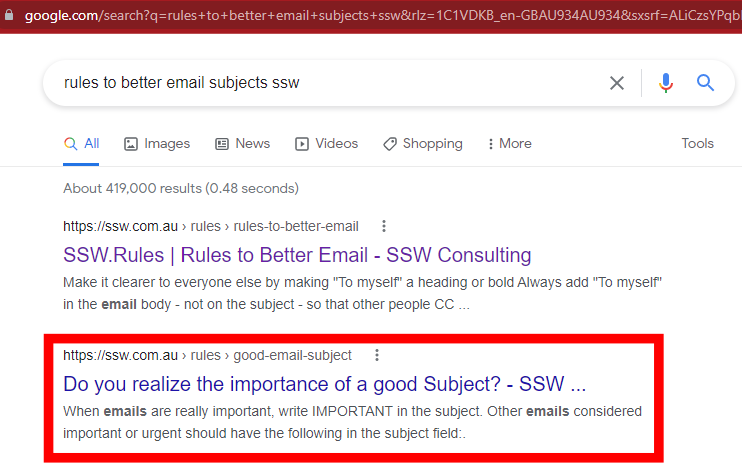
❌ Figure: Bad example - There is no context provided in the title, it could be about subjects for Meetings, Conferences, Videos or something entirely different
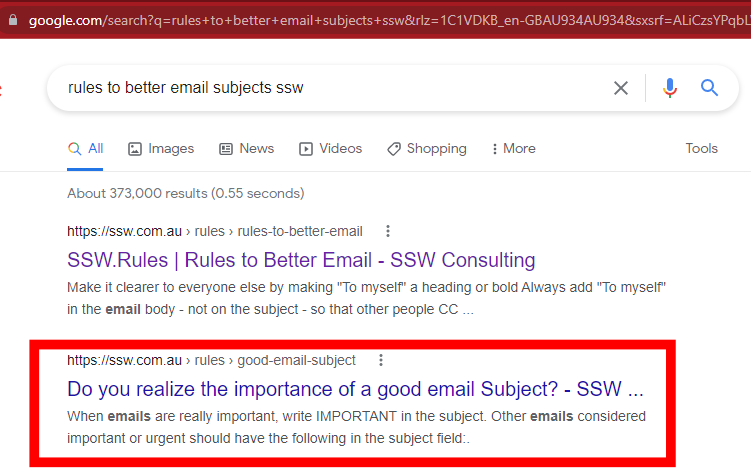
🙂 Figure: OK example - The context is included in the title
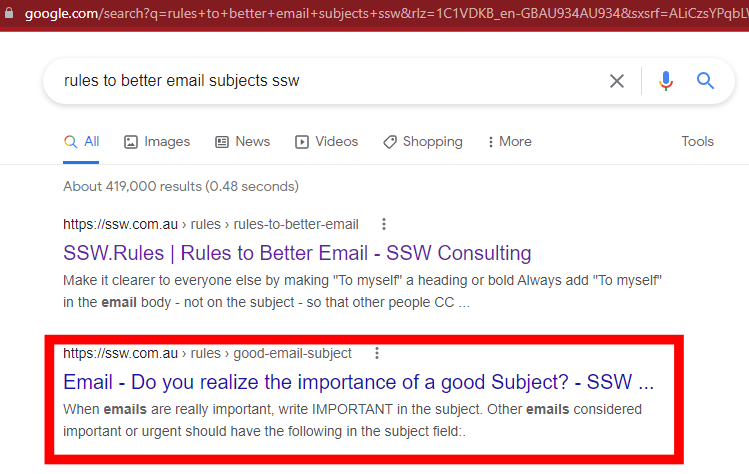
✅ Figure: Good example - The prefix very clearly identifies the subject in the title