Do you know the communication options for online meetings and collaboration?
Loading last updated info...
Communicating through group emails and sharing files across a patchwork of different services can quickly become difficult to manage, increasing the risk of missed messages, duplicated files, and outdated information.
Microsoft Teams is recommended for company meetings and internal communication. It provides a central place for teams to chat, meet, share files, and collaborate.
One of Teams' key strengths is its integration with Microsoft 365. Users can move easily between conversations, meetings, shared documents, calendars, and other collaboration tools without switching between separate services. Files shared in Teams can also be stored and managed through SharePoint and OneDrive, helping teams work from the same version of a document.
Teams can be organized into channels for specific projects, departments, or topics, keeping conversations and related files together rather than spreading them across long email threads.
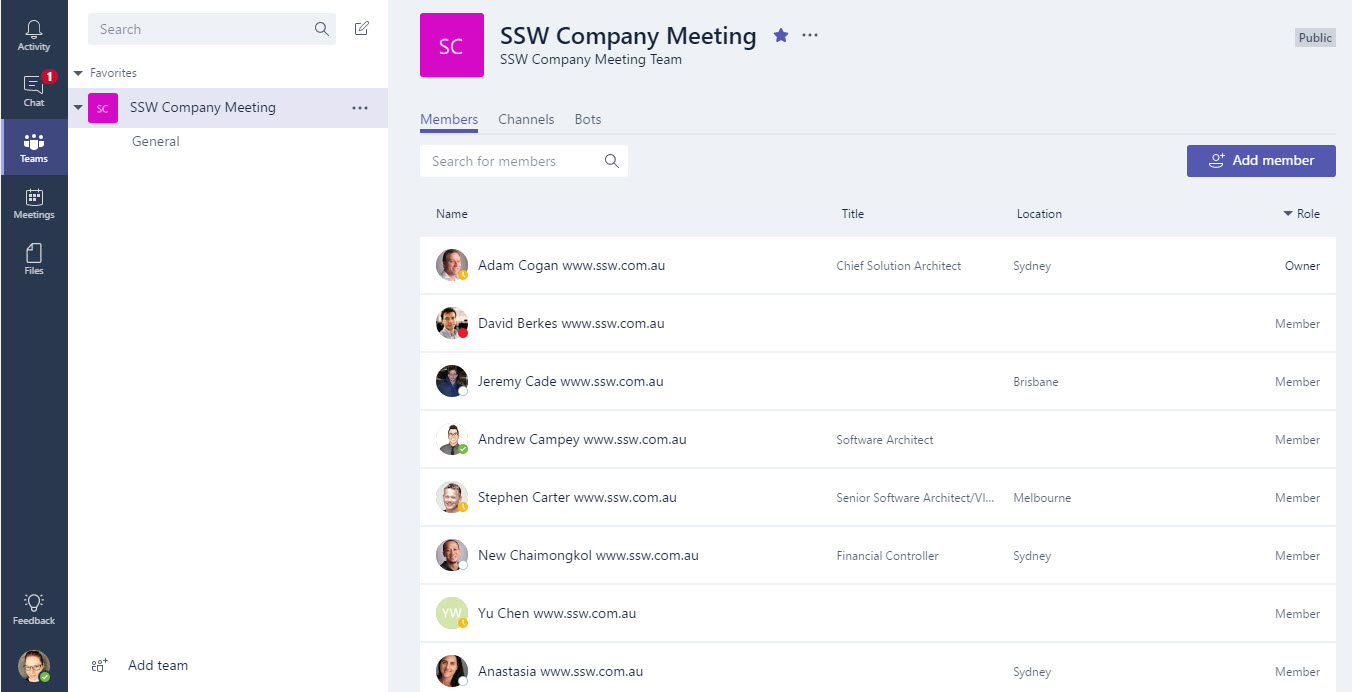
✅ Figure: Good example - Teams shows all team members and keeps project discussions in one place, with data integrated with SharePoint
What are the options?
Microsoft Teams (⭐️ Recommended) – A collaboration platform for chat, meetings, calls, file sharing, and teamwork. Its tight integration with Microsoft 365 makes it particularly useful for organizations already using tools such as Outlook, Word, Excel, SharePoint, and OneDrive
Zoom – A widely used platform focused primarily on video meetings, webinars, and online events. It is a strong option when video conferencing is the main requirement, particularly when meetings frequently include external participants