Do you know the importance of testing your interface?
Loading last updated info...
You’ve spent the last sprint designing and building a feature. It looks clean, the logic makes sense, and everyone on the team agrees it’s “obvious” how it works.
Then a real user tries it, and gets stuck immediately. Buttons are missed, terminology is misunderstood, and users don't follow the journey we carved out for them. These problems are rarely caught in code reviews or internal demos, but they surface instantly when you test the interface with real users.
Why testing your interface matters
1. You are not your user
No matter how experienced you are, you are not your user. Designers, developers, and stakeholders all bring assumptions, domain knowledge, and biases that real users don’t share.
People often:
- Don’t behave the way we expect
- Can’t explain what they’re struggling with
- Say one thing but do another
Interface testing replaces assumptions with evidence by observing what users actually do, not what we think they will do.
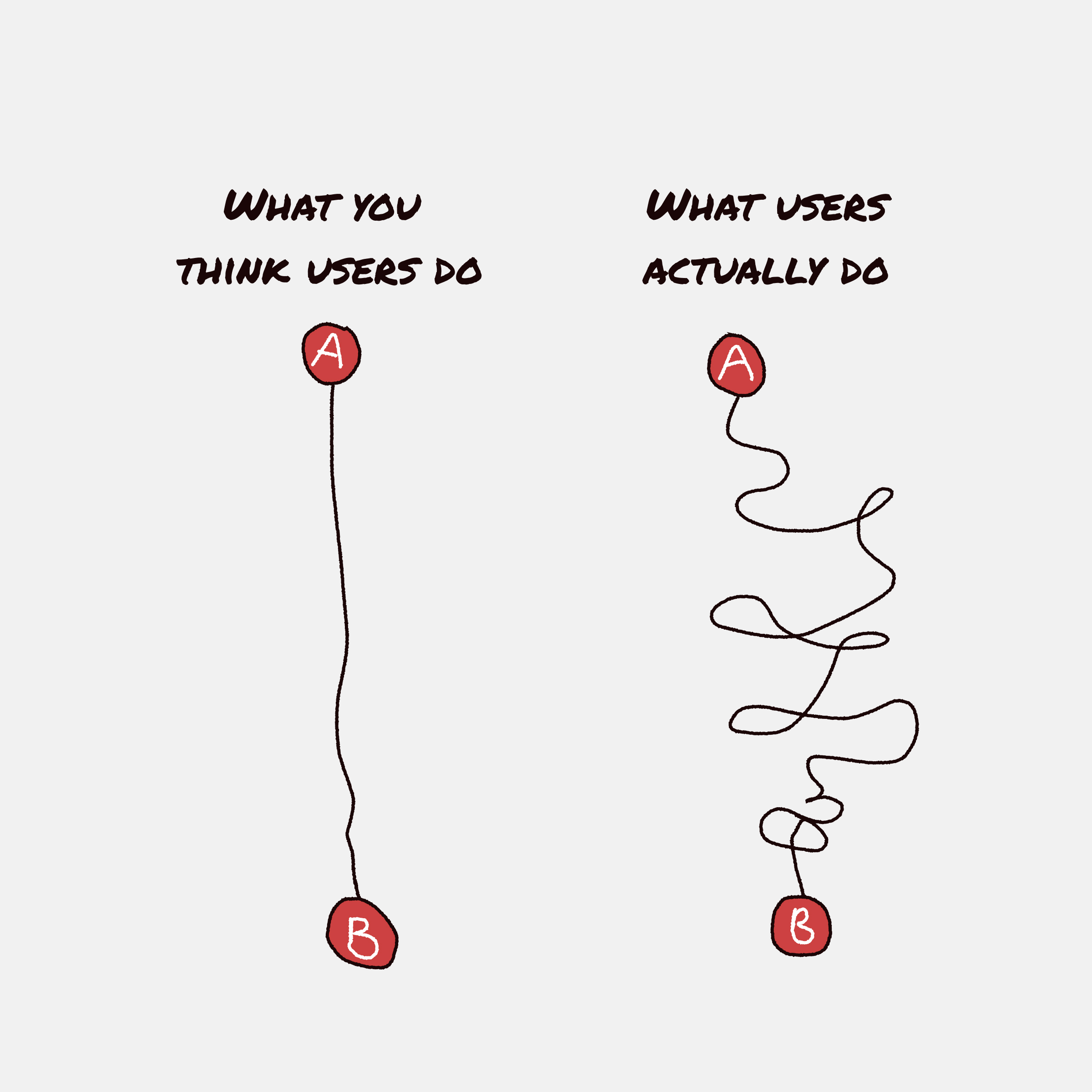
Figure: It's all about understanding
2. Fixing usability issues late is expensive
The cost of change increases dramatically as a project progresses. Early in the lifecycle, there are many design alternatives and changes are cheap. Once features are built and deployed, even small usability fixes can be costly.
Testing early:
- Prevents expensive rework
- Reduces risk before launch
- Improves outcomes with minimal effort
This is why lightweight testing early and often is far more effective than waiting for a “perfect” solution.
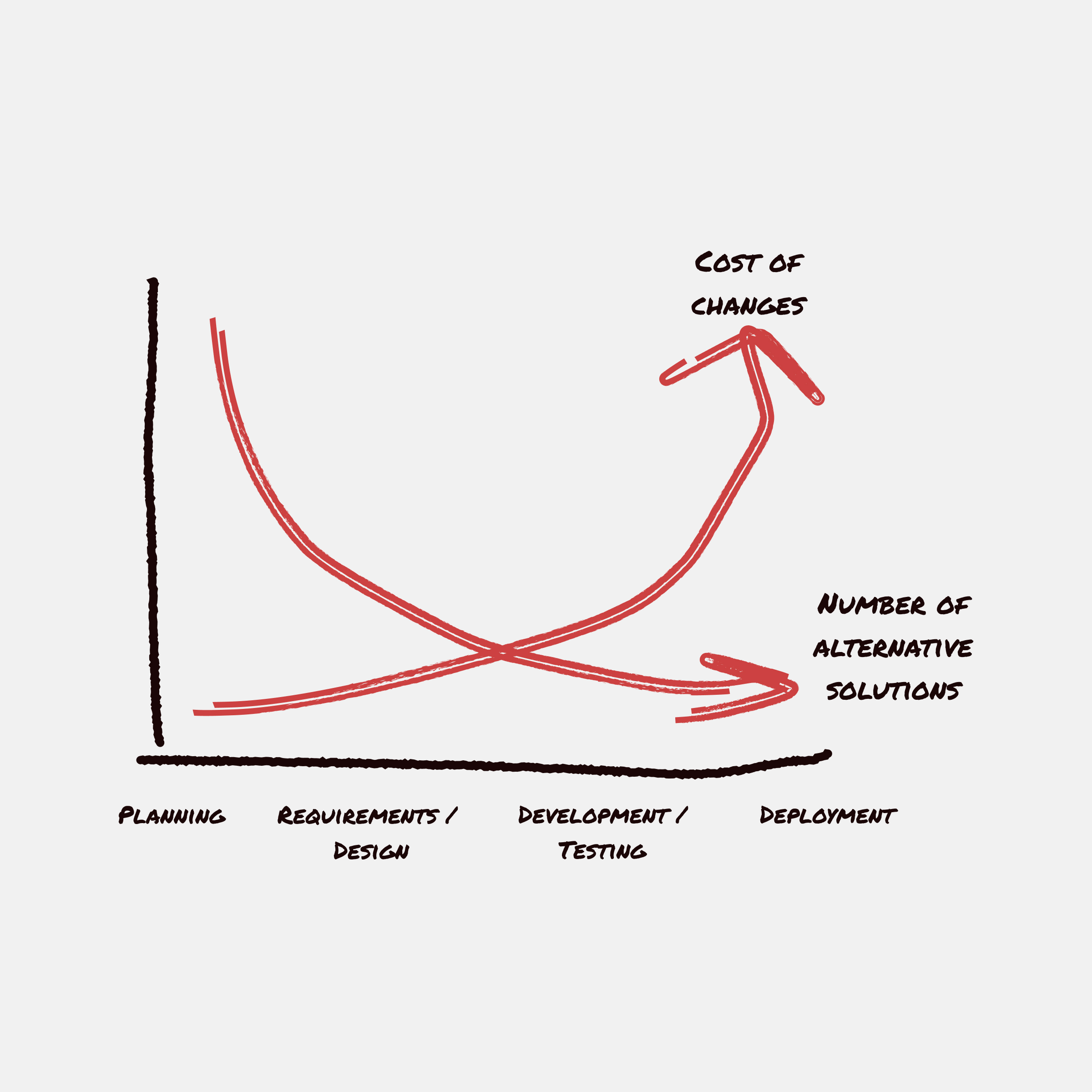
Figure: The secret weapon - testing early, and often
What does “testing your interface” really mean?
It’s not asking for opinions
Usability testing is not a design review or a feedback session. It’s structured observation.
You test an interface by:
- Giving users realistic tasks
- Watching them attempt those tasks
- Noticing where they hesitate, fail, or get confused
Tip: The goal is not to hear “I like it”... it is to see whether users can successfully do what they need to do.
Usability is the minimum bar
Usability is only one part of user experience, but it’s non-negotiable.
If users can’t:
- Find what they need
- Complete core tasks
- Understand what’s happening
...then the experience fails, regardless of how polished the UI looks.
Types of interface testing
1. Usability walkthroughs (early and lightweight)
Usability walkthroughs are a powerful, low-cost technique:
- Informal and quick to set up
- Can use sketches, wireframes, or prototypes
- Ideal early in the design process
- Great for identifying obvious issues fast
Tip: They are especially effective when used regularly, not just once.
2. Formal usability testing (structured and rigorous)
Formal usability testing involves:
- A test plan
- Defined tasks and metrics
- Consistent sessions across participants
- Clear analysis and reporting
Tip: This level of rigor is useful when validating critical workflows or reducing risk before release.
Bonus: Think aloud testing (applies to both types)
To get the most value from limited testing time, ask participants to ‘think aloud’ while using the product.
- Have users continuously verbalise what they’re thinking as they move through the interface.
- This reveals confusion, assumptions, and mental models that aren’t visible through observation alone.
Read more: Thinking Aloud: The #1 Usability Tool – Nielsen Norman Group
What good interface testing focuses on
When testing your interface, pay attention to:
- Task success – Can users complete what they came to do?
- Errors – Where do they make mistakes, and how severe are they?
- Learnability – How long does it take to understand the interface?
- Efficiency – Are there unnecessary steps or confusion?
- Frustration signals – Hesitation, confusion, or visible annoyance
Common misconceptions
"We don’t have time or budget”
You don’t need large sample sizes. A small number of users - often around 3-5 users will uncover the majority of usability issues. The returns diminish quickly beyond that.
“We’ll test once it’s finished”
Testing late finds problems when they’re hardest to fix. Testing early helps shape the solution while change is still cheap.
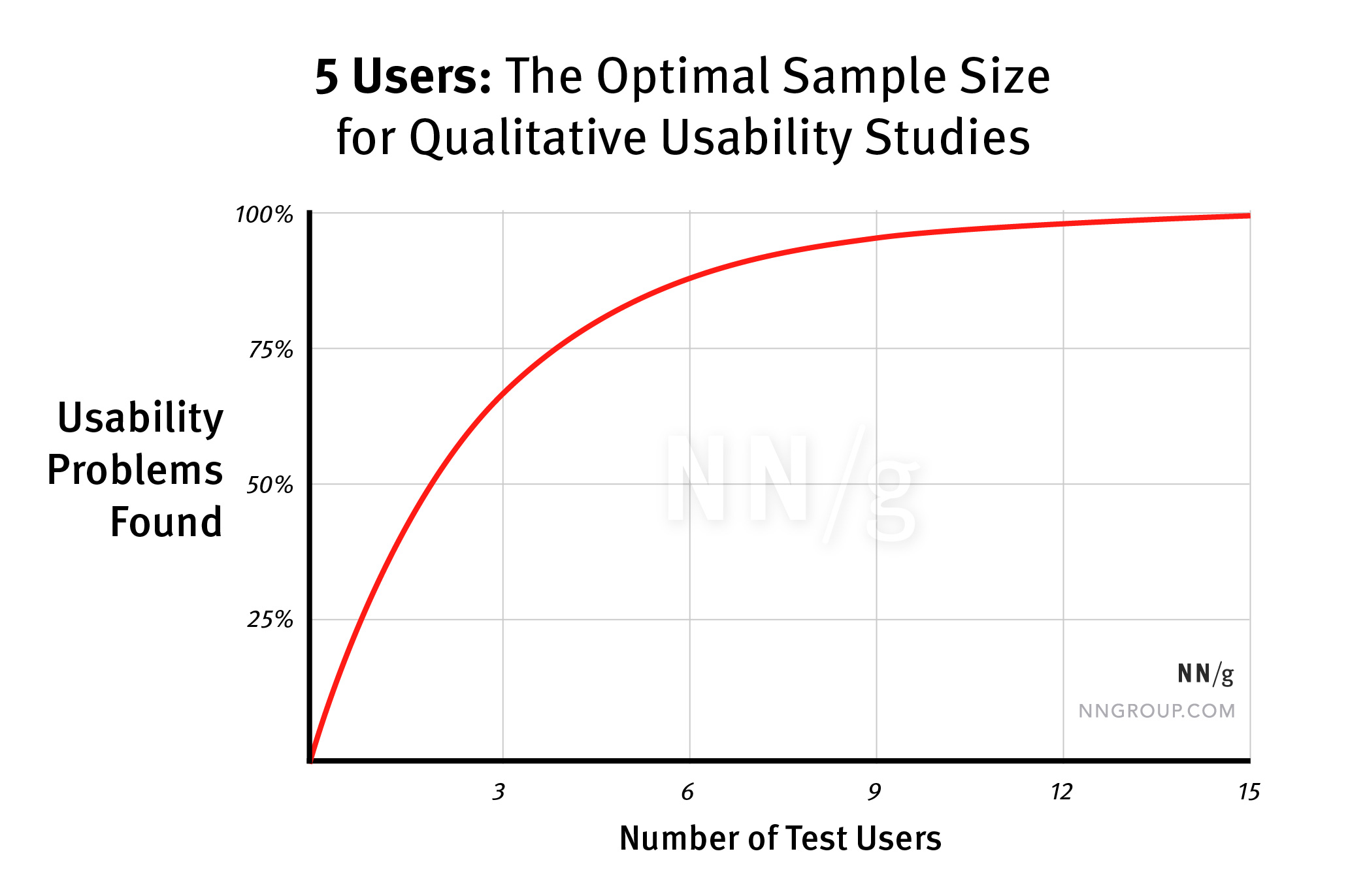
Figure: Elaborate usability tests are a waste of resources
Make interface testing a habit
Interface testing isn’t a phase at the end of a project - it’s a core part of building successful products that people love to use. If you’re not testing your software, you’re guessing.
The best teams:
- Test early
- Test often
- Watch real users
- Iterate based on evidence